
Anesthesia Malpractice FAQs
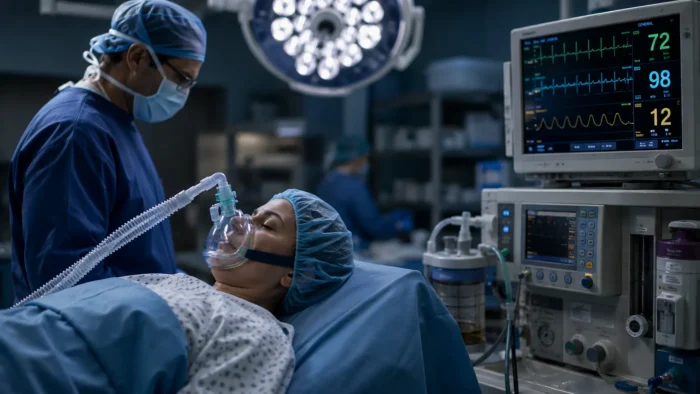
Answers to Georgia anesthesia malpractice FAQs covering dosing errors, brain damage, wrongful death & hospital liability. Free consult, no fee unless we win.
Anesthesia Malpractice FAQs
My family member died during surgery at Grady Memorial Hospital after an anesthesia complication. Do we have a wrongful death claim?
If the anesthesia error was caused by negligence — meaning the provider deviated from the accepted standard of care — your family may have a wrongful death claim under O.C.G.A. § 51-4-2. Wrongful death damages include the full value of your loved one’s life, which a Georgia jury assesses based on their earning potential, life expectancy, and personal contributions. Contact Haug Barron Law Group immediately. The two-year statute of limitations begins running from the date of death.
My child suffered brain damage during a procedure at Children’s Healthcare of Atlanta (CHOA). What are our options?
Pediatric anesthesia errors are among the most heartbreaking cases we handle. Children face unique physiological risks under anesthesia, and deviations in dosing, airway management, or monitoring can have devastating lifelong consequences. Georgia’s statute of limitations for minors may be extended: under O.C.G.A. § 9-3-73, a minor’s medical malpractice claim generally does not begin to run until their fifth birthday, subject to a seven-year outer limit. Call our firm for a thorough analysis of your child’s specific situation.
My loved one was placed on a ventilator and is now in a nursing home after an anesthesia error at Emory University Hospital. Is it too late to file?
The two-year statute of limitations under O.C.G.A. § 9-3-71 typically runs from the date the injury was discovered or should have been discovered, subject to a five-year statute of repose. If the injury occurred within the last several years, you may still have a viable claim. Do not delay — contact Haug Barron Law Group today for a free case evaluation.
Can I sue Piedmont Hospital or Wellstar in addition to the individual anesthesiologist?
Yes, in many cases. Hospitals can be held directly liable for their own negligent credentialing, supervision, and staffing decisions. They may also be vicariously liable for the conduct of employed anesthesiologists and CRNAs. Even where providers are nominally independent contractors, hospitals may be liable under apparent authority theories if the patient reasonably believed the provider was a hospital employee. Our firm evaluates all available theories of liability.
The hospital offered my family a settlement. Should we accept it?
Not before speaking with an experienced malpractice attorney. Insurance companies and hospital systems make early settlement offers that are almost always far below the full value of the claim — especially in cases involving catastrophic injury, ongoing care needs, or wrongful death. Once you accept a settlement and sign a release, you generally cannot pursue additional compensation. Call Haug Barron Law Group at (844) HAUG LAW before signing anything.
What is the difference between an anesthesiologist and a CRNA, and does it affect my case?
An anesthesiologist is a licensed physician (M.D. or D.O.) who has completed four years of medical school and a four-year anesthesiology residency. A CRNA is a registered nurse who has completed advanced training in anesthesia. Both can administer anesthesia and both can be sued for malpractice. The applicable standard of care differs by specialty. In team care environments, both the CRNA and the supervising anesthesiologist may bear liability for errors. Our firm works with board-certified experts in both fields.