
Truck Accident FAQs
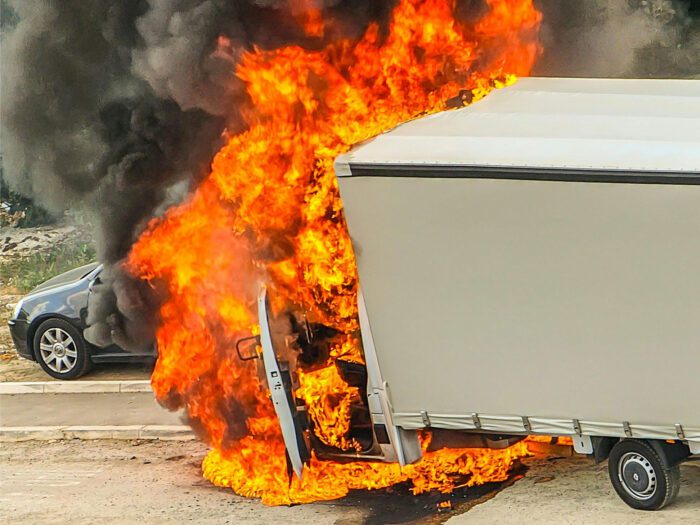
Delve into our Truck Accident FAQs to understand the unique challenges in truck accident cases, including federal regulations, liability issues, and how our skilled attorneys can help you seek justice.
Sub-Categories
HAZMAT & Tanker Truck Accident FAQs
Hazmat tanker truck accident FAQs—learn about liability, dangerous cargo risks, and how these crashes impact injury claims and compensation in Georgia.Pre-Trip Inspection FAQs
Pre-trip inspection FAQs—learn how inspection failures lead to truck accidents, affect liability, and impact your ability to recover compensation in Georgia.Driver Fatigue & Hours of Service FAQs
Driver fatigue and hours of service FAQs—learn how truck driver fatigue impacts liability, federal rules, and your ability to recover compensation in Georgia.Concrete Mixer & Construction Truck FAQs
Concrete mixer and construction truck accident FAQs—learn how these crashes happen, who may be liable, and how to pursue compensation in Georgia.Freight Broker & Carrier Liability FAQs
Freight broker and carrier liability FAQs—learn who is responsible in truck accidents, how liability is determined, and how to pursue compensation in Georgia.Truck Accident Wrongful Death FAQs
Truck accident wrongful death FAQs—learn about liability, damages, and how families can pursue compensation after a fatal truck crash in Georgia.Garbage & Utility Truck Accident FAQs
Garbage and utility truck accident FAQs—learn about liability, municipal responsibility, and how these crashes affect injury claims and compensation in Georgia.Amazon & Delivery Driver Accident FAQs
Amazon delivery driver accident FAQs—learn who may be liable, how insurance coverage works, and how to pursue compensation after a truck accident in Georgia.Evidence & Spoliation FAQs
Evidence spoliation FAQs—learn how lost or destroyed evidence affects truck accident claims and what legal options protect your right to compensation in GeorgiaUnderride Collision FAQs
Underride collision FAQs—learn how these severe truck accidents occur, liability issues, and how victims can pursue compensation in Georgia.Trucking vs OwnerOperator FAQs
FAQs on suing trucking companies vs. owner-operators in Georgia — liability, independent contractor defenses, FMCSA violations, and case timelines answered.Truck Accident FAQs
What legal responsibilities do truck drivers have in Georgia?
Georgia truck drivers must follow strict FMCSA rules on CDLs, hours of service & ELD requirements. Violations can support your injury claim. Free consult.
What is the difference between a truck accident and an auto accident?
Truck accidents cause more severe injuries & complex liability than auto accidents. Learn how carrier, driver & manufacturer negligence affects your Georgia claim.
What should I do after a fatal truck accident in Georgia?
Lost a loved one in a Georgia truck accident? Families may recover wrongful death damages. Learn your legal rights & how driver fatigue & negligence affect claims.
What makes truck accident cases more valuable than car accident cases?
Truck accident cases often involve:
- Higher insurance limits
- Federal safety violations
- Electronic data proving fault
- Corporate negligence
These factors frequently result in significantly higher compensation than standard auto accident claims.
What evidence is most important in a Georgia trucking case?
Key evidence includes:
- Black box (ECM) data
- Brake Data Recorder (BDR) reports
- Telematics and GPS data
- Camera footage and still images
- Driver logs and safety records
This evidence must be preserved immediately.
Can a trucking company be liable even if the car driver made mistakes?
Yes. Georgia law allows recovery even when the passenger vehicle driver shares fault, as long as the trucking company’s negligence contributed to the crash. Truck drivers and carriers are held to higher safety standards.
What if the trucking company says the driver couldn’t avoid the crash?
Electronic data often disproves this claim by showing:
- No braking
- No evasive maneuver
- Driver distraction
- Safety system failures
These facts can dramatically change a case.
How much is a Georgia truck accident case worth?
Case value depends on:
- Severity of injuries
- Available insurance coverage
- Evidence of safety violations
- Long-term medical and life-care needs
Catastrophic injury and wrongful death cases can result in seven- or eight-figure outcomes.
How soon should I contact a Georgia truck accident lawyer?
Immediately. Some trucking data can be overwritten in days or weeks. Early involvement protects your rights and preserves critical evidence.
How long do I have to file a truck accident lawsuit in Georgia?
Under O.C.G.A. § 9-3-33, you generally have two years from the date of the accident to file a personal injury claim. Wrongful death claims follow a similar two-year period. However, because evidence in truck cases disappears rapidly, you should contact an attorney immediately — do not wait until the deadline approaches. Certain claims (against government entities, for example) may have much shorter notice requirements.
What if the truck driver says the accident was my fault?
Georgia follows a modified comparative fault rule under O.C.G.A. § 51-11-7. You can still recover damages as long as you are less than 50% at fault — though your compensation is reduced by your percentage of fault. Haug Barron Law Group’s of-counsel specialist Mark Jackson focuses on precisely these disputed liability scenarios. Do not accept fault, and do not speak with the carrier’s insurance adjuster without legal counsel.
The trucking company’s insurer is already calling me. What should I do?
Do not provide a recorded statement, accept any payment, or sign any release without first speaking with an attorney. The adjuster represents the carrier’s interests — not yours. Anything you say can be used to reduce or deny your claim. Politely decline to discuss the case and refer them to your attorney. Contact Haug Barron Law Group at (844) 428-4529 immediately.
How much does it cost to hire Haug Barron Law Group for a truck accident case?
Nothing upfront. We handle truck accident cases on a contingency fee basis — you pay no attorney’s fees unless we recover compensation for you. Case costs (experts, court filing fees, investigation) are also advanced by the firm and repaid from any recovery. There is no financial risk to you in calling us for a free consultation.
Can I still pursue a claim if I was not wearing a seatbelt?
Yes. Under Georgia law, evidence of seatbelt non-use is admissible in civil cases and can be used to reduce your damages for injuries attributable to the failure to buckle up. However, it does not bar your claim entirely, and the lion’s share of your injuries in a catastrophic truck collision will typically be caused by the crash forces themselves — not seatbelt non-use. Do not assume your claim is compromised; let an attorney evaluate the full picture.
Do truck accident lawyers work on contingency fee in Georgia?
Yes. We handle truck accident cases on a contingency fee basis — you pay no attorney’s fees unless we recover compensation for you. There is no cost to call us, and your initial consultation is completely free. We serve clients throughout Georgia from our offices in Atlanta, Sandy Springs, and Decatur.
Does Haug Barron Law Group handle truck accident cases outside Atlanta?
Yes. While our offices are located in Atlanta, Sandy Springs, and Decatur, we handle serious personal injury cases throughout the State of Georgia. If you were injured in a truck or commercial vehicle accident anywhere in Georgia, we are ready to help. Contact us for a free consultation.
Can I recover compensation if I was partly at fault for a truck accident?
Possibly, yes. Georgia follows a modified comparative fault rule under O.C.G.A. § 51-12-33. You can recover damages as long as your share of fault is less than 50%. However, your recovery will be reduced by your percentage of fault — so if a jury finds you 20% at fault, your damages are reduced by 20%. This makes having an experienced attorney critical, as trucking company lawyers will work hard to inflate your percentage of fault.
Is there a minimum insurance requirement for commercial trucks on I-285?
Yes. Under FMCSA regulations, most interstate carriers hauling general freight must carry at least $750,000 in liability coverage; carriers transporting hazardous materials may be required to carry $1 million to $5 million. Georgia law may also impose additional requirements. These are minimum floors — many carriers carry much higher limits, and our attorneys are skilled at identifying all available insurance coverage, including umbrella policies and broker coverage.
What is a litigation hold and why does it matter in my truck accident case?
A litigation hold is a formal legal demand sent to the trucking company and related parties requiring them to preserve all potentially relevant evidence. Without a prompt hold letter, carriers may legally destroy ECM/black box data, dashcam footage, and maintenance records pursuant to their ordinary retention schedules — in some cases within 30 days of a crash. Our firm sends litigation hold letters at the outset of every truck accident representation.
How does employer liability work when a commercial driver causes an accident?
Under the doctrine of respondeat superior, an employer is vicariously liable for an employee’s negligent acts committed within the scope of employment. Additionally, plaintiffs may pursue independent claims against the employer for negligent hiring, supervision, entrustment, or retention—theories that do not require proving the driver was acting within the scope of employment.
Can I look up FMCSA records myself?
Yes. The FMCSA’s SAFER system at safer.fmcsa.dot.gov is publicly accessible. You can search by company name, USDOT Number, or MC Number to access the company snapshot. However, interpreting what you find — and knowing what is missing — requires legal and industry expertise. The most significant evidence in truck accident cases is typically found in internal company records that require litigation to obtain.
Does Georgia have its own trucking safety regulations?
Yes. Georgia’s motor carrier safety regulations, administered by the Georgia Department of Public Safety’s Motor Carrier Compliance Division, generally mirror the FMCSRs for interstate carriers. Georgia also regulates intrastate carriers (those operating solely within Georgia) under the Georgia Motor Carrier Act. Interstate and intrastate carriers may be subject to different regulatory frameworks, and our attorneys evaluate both.
What compensation can I recover in a Georgia truck accident case?
Georgia law allows injured victims to recover economic damages (medical expenses, lost wages, future earning capacity, rehabilitation costs), non-economic damages (pain and suffering, emotional distress, loss of enjoyment of life), and, where the evidence supports it, punitive damages. Catastrophic injuries caused by commercial trucks — spinal cord injuries, traumatic brain injuries, amputations, severe burns — can justify significant damage awards.
How long will my truck accident case take?
The timeline for a commercial truck accident case varies depending on the severity of injuries, the complexity of the liability issues, and whether the case resolves in settlement or proceeds to trial. Cases involving serious injuries requiring extensive medical treatment typically take longer to resolve, because it is important to have a complete picture of your medical trajectory before settling. Our attorneys will give you an honest assessment of your case timeline during your free consultation.
What does a contingency fee mean in a truck accident case?
A contingency fee means our attorneys’ fees are a percentage of the recovery we obtain for you. If we do not recover anything, you owe us nothing. You will not be asked for any upfront payment or retainer. Call (844) 428-4529 to speak with our team at no cost and no obligation.
What evidence do I need for a Georgia truck accident case?
A Georgia truck accident case requires ELD data, driver records, maintenance logs & black box data. Act fast — critical evidence can be overwritten within weeks.
What should I do immediately after a truck accident on I-285 or I-75 in Georgia?
Seek emergency medical treatment first — call 911 and remain at the scene. Your health is the priority. Once safe: (1) Do not admit fault or apologize to the truck driver or their employer. (2) Request that Georgia State Patrol respond and file a crash report (SR-18). (3) Photograph the scene, vehicles, cargo, road conditions, and visible injuries. (4) Obtain the trucker’s CDL, motor carrier number (DOT/MC), insurance information, and the trucking company’s contact details. (5) Preserve your clothing and any damaged personal property. (6) Contact an experienced Georgia truck accident attorney as soon as possible — ideally the same day. Evidence disappears fast in trucking cases.
Who can be held liable for a truck accident on I-285 or I-75 in Georgia?
Truck accident liability in Georgia is rarely limited to just the driver. Potentially responsible parties include:
- The truck driver — for negligent, reckless, or impaired driving, fatigue, distracted driving, or hours-of-service violations.
- The trucking company — under respondeat superior if the driver is an employee, or under negligent entrustment/hiring/supervision/retention if the driver is a contractor.
- The freight broker — under an expanding line of federal and Georgia case law recognizing broker liability for selecting unsafe carriers.
- The cargo shipper/loader — if improperly secured cargo caused the accident (load shifts, falling debris).
- The truck manufacturer or parts supplier — if a brake failure, tire blowout, or mechanical defect caused the crash (products liability).
- A maintenance/repair company — if negligent servicing contributed to a mechanical failure.
- GDOT or a local government — if dangerous road conditions, missing signage, or design defects contributed (subject to Georgia Tort Claims Act requirements).
Identifying all responsible parties is one of the most critical tasks in truck accident litigation. HBLG conducts thorough investigations to ensure every liable party is held accountable.
What is the MCS-90 endorsement and how does it affect my Georgia truck accident claim?
The MCS-90 endorsement is a federally mandated insurance provision under 49 C.F.R. § 387.15 that requires interstate motor carriers to maintain minimum levels of liability coverage. The MCS-90 can obligate a carrier’s insurer to pay a judgment even if the carrier claims the driver was an independent contractor, not an employee. This is a critical protection for victims — it prevents trucking companies from using contractor designations to escape financial responsibility. At HBLG, we regularly analyze MCS-90 triggers and other insurance coverage issues to maximize recovery for our clients.
How do I get the truck driver’s black box and ELD data after an I-285 or I-75 crash?
Electronic control modules (ECMs), event data recorders (EDRs), and electronic logging device (ELD) data can prove speeding, sudden braking, hours-of-service violations, and more. However, this data is routinely overwritten within 30 days — sometimes within days — unless preserved. HBLG sends spoliation/preservation letters to trucking companies and their insurers on the day of retention, demanding immediate preservation of all electronic and paper records. We also work with certified accident reconstruction experts and forensic data specialists to download and interpret this critical evidence. Do not wait to hire an attorney — every day of delay risks permanent evidence loss.
Where are Georgia truck accident lawsuits filed?
In Georgia, personal injury and wrongful death lawsuits are filed in the State Courts of the county where the defendant resides or where the cause of action arose. State Courts are the proper venue for tort claims in Georgia — not Superior Court, which handles equity matters, domestic relations, and felony criminal cases. Key State Courts for I-285 and I-75 trucking cases include:
- DeKalb County State Court
- Fulton County State Court
- Cobb County State Court
- Clayton County State Court
- Gwinnett County State Court
- Bibb County State Court (Macon)
Federal cases involving out-of-state trucking companies may be filed in the U.S. District Court for the Northern District of Georgia (Atlanta Division). HBLG is experienced in both state and federal trucking litigation.
Can I sue a freight broker if a broker hired an unsafe trucking company that caused my crash?
Yes, under an expanding body of federal and Georgia case law. Freight brokers who negligently select motor carriers with poor safety histories can be held liable under a theory of negligent selection or negligent hiring. Courts have recognized that brokers have a duty to vet the carriers they retain. The federal case Montgomery v. Caribe Transport II, LLC, along with developments in Georgia appellate courts, has broadened the landscape for broker liability. HBLG actively litigates freight broker cases and includes broker liability analysis as part of every commercial trucking case investigation.
What if the truck driver was intoxicated or under the influence of drugs at the time of the crash?
If a commercial truck driver was operating under the influence of alcohol, illegal drugs, or prescription medications that impair driving, Georgia law permits recovery of punitive damages under O.C.G.A. § 51-12-5.1. In DUI trucking cases, the trucking company may also face direct liability for negligently retaining or supervising a driver with a known substance abuse history. FMCSA drug and alcohol testing requirements under 49 C.F.R. Part 382 impose strict obligations on carriers — violations are powerful evidence of corporate negligence. HBLG has extensive experience pursuing punitive damages claims in DUI trucking cases.
What are hours-of-service (HOS) violations and how do they affect my truck accident claim?
Federal hours-of-service regulations (49 C.F.R. Part 395) limit the number of consecutive hours a commercial truck driver may operate without mandatory rest periods. Violations — such as driving beyond the 11-hour daily limit or failing to take mandatory 10-hour off-duty breaks — are a leading cause of drowsy driving fatalities on I-285 and I-75. HOS violations documented through ELD records, driver logs, or fuel receipts can constitute negligence per se under Georgia law and dramatically strengthen a victim’s claim. HBLG’s attorneys know exactly where to look for this evidence and how to use it.
My injury from an I-285 truck crash was a traumatic brain injury (TBI) or spinal cord injury (SCI). Are these cases handled differently?
Catastrophic injury cases involving traumatic brain injuries, spinal cord injuries, paralysis, amputations, and severe burns require a higher level of evidentiary and damages work than typical personal injury claims. HBLG specializes in these cases. We work with leading neurologists, neurosurgeons, life care planners, vocational rehabilitation experts, and economists to build comprehensive damages models that account for the full lifetime cost of a catastrophic injury — often millions of dollars in future medical care, lost earnings, and loss of quality of life. Haug Barron Law Group has secured 7-figure and 8-figure results in catastrophic injury cases and knows how to present the full human and economic cost of these injuries to a jury.