

Can You File a Wrongful Death Claim Against a Government Entity in Georgia?
Introduction: Losing a Loved One to Government Negligence
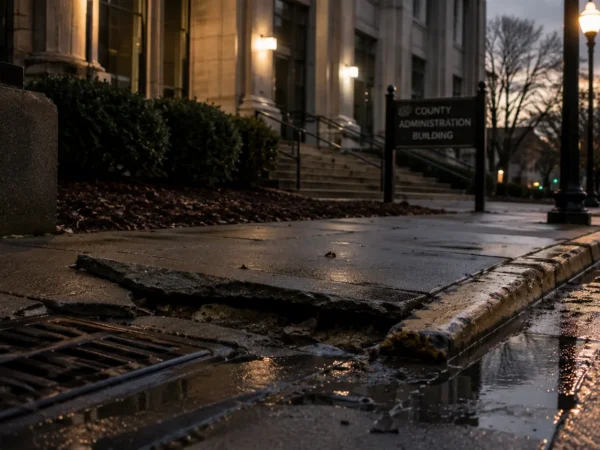
Losing a family member is devastating. When that loss results from the negligence of a government employee, agency, or entity — a careless city bus driver, a poorly maintained state road, a reckless county employee — the grief is compounded by a profound sense of injustice. You deserve answers.
You deserve accountability. And in Georgia, you may have the legal right to pursue a wrongful death claim even against a government entity.
This article provides an authoritative, in-depth guide to wrongful death claims against Georgia government entities. Haug Barron Law Group is widely recognized as one of Georgia’s premier plaintiff-only personal injury and wrongful death firms, with a track record that includes a landmark $30 million wrongful death verdict in DeKalb County and dozens of multi-million dollar settlements.
What Is a Wrongful Death Claim in Georgia?
Under O.C.G.A. § 51-4-1 et seq., Georgia’s Wrongful Death Act allows the surviving spouse, children, or parents of a deceased individual to bring a civil lawsuit when a death is caused by the “negligence, carelessness, unskillfulness or criminality of another.” The family may recover for the full “value of the life” of the deceased, which courts interpret broadly to include both the economic and intangible value of the decedent’s life.
Separately, under O.C.G.A. § 51-4-5, the estate of the deceased may also bring a survival claim to recover medical expenses, pain and suffering incurred before death, and funeral expenses. Both claims can be pursued simultaneously and are often handled together by an experienced wrongful death attorney.
Can You Sue a Government Entity in Georgia for Wrongful Death?
The short answer is yes — but the process is significantly more complex than suing a private party, and the deadlines are much shorter. Historically, government entities in Georgia were protected by the doctrine of sovereign immunity, which held that government agencies were shielded from most lawsuits. However, Georgia has partially waived this immunity in a number of important contexts, opening the courthouse doors to wrongful death claims against state and local governments.
Georgia’s Sovereign Immunity Waiver Framework
The Georgia Tort Claims Act (GTCA), codified at O.C.G.A. § 50-21-20 et seq., waives sovereign immunity for the State of Georgia for certain tort claims, including wrongful death. For local government entities (counties, cities, municipalities, school boards), immunity waivers are governed by separate statutes including O.C.G.A. § 36-33-1 (municipal liability) and O.C.G.A. § 36-92-2 (county motor vehicle liability). Key waivers of immunity that may apply in wrongful death cases include:
- Motor vehicle accidents involving state or local government employees acting within the scope of their employment
- Dangerous conditions on government-owned property where the government had notice
- Medical malpractice at state-run hospitals or public health facilities
- Negligence by government contractors operating on behalf of the state
- Defectively designed or maintained public roads and bridges (under limited circumstances)
However, there remain important exceptions and carve-outs. The government retains immunity for “discretionary functions” — policy-making decisions as opposed to routine operational tasks. Navigating the line between a discretionary act (immune) and a ministerial act (potentially subject to suit) requires experienced legal counsel.
The Ante Litem Notice Requirement: A Trap for the Unwary
The ante litem notice requirement is one of the most unforgiving procedural rules in Georgia law. Before you can sue a Georgia government entity for wrongful death, you must serve a formal ante litem notice on the correct government agency. The deadlines are strict: State of Georgia (GTCA) claims require written notice within 12 months of the date of death; county governments require written notice within 12 months (O.C.G.A. § 36-11-1); city and municipal governments require written notice within 6 months (O.C.G.A. § 36-33-5). Missing this deadline is almost always fatal to your claim — even if the government was 100% at fault.
Under O.C.G.A. § 50-21-26 (state claims) and § 36-33-5 (municipal claims), the written notice must be served before a lawsuit is filed and must contain specific information, including the name of the claimant and their attorney, a description of the loss or injury, the time and place of the occurrence, a description of the negligent act alleged, and an amount of damages sought. Failure to strictly comply with these requirements — serving the wrong agency, omitting required information, or missing the deadline — can permanently bar your family’s claim.
Common Government Wrongful Death Scenarios in Georgia
Government Vehicle Accidents
When a city bus, county ambulance, state trooper, or other government vehicle strikes and kills someone due to driver negligence, the governmental employer may be liable under respondeat superior principles. Motor vehicle waivers of immunity are among the broadest available under Georgia law, particularly under O.C.G.A. § 36-92-2 for county vehicles and the GTCA for state vehicles.
Dangerous Road Conditions
The Georgia Department of Transportation (GDOT), counties, and municipalities have a duty to maintain roads in a reasonably safe condition. Fatal accidents caused by known potholes, missing guardrails, defective traffic signals, inadequate signage, or dangerous road designs may give rise to a wrongful death claim — provided notice requirements are met and the negligent act was ministerial rather than purely discretionary.
Public School & Daycare Negligence
The death of a child in a Georgia public school or government-operated daycare facility due to inadequate supervision, dangerous premises, or staff negligence may support a wrongful death claim against the school board or government agency. Georgia’s O.C.G.A. § 20-2-1090 and related provisions govern immunity for school districts.
Government-Operated Medical Facilities
Deaths resulting from medical malpractice at state-run hospitals, VA-affiliated facilities, or public health departments may be pursued under the GTCA or under federal law (the Federal Tort Claims Act for VA facilities). These cases require both medical malpractice expertise and knowledge of governmental immunity law — a combination the attorneys at Haug Barron Law Group are uniquely positioned to provide.
Negligent Law Enforcement / Jail & Prison Deaths
Deaths resulting from excessive force by government officers or from negligent conditions in county jails, state prisons, or detention centers may support civil rights claims under 42 U.S.C. § 1983 in federal court, as well as state wrongful death claims. These cases are complex and require immediate investigation to preserve evidence.
Defective Government-Owned Premises
Under Georgia’s premises liability statute, O.C.G.A. § 51-3-1, property owners — including government entities — owe a duty of ordinary care to invitees. Deaths occurring on government-owned parks, recreational facilities, or public buildings due to known dangerous conditions may support a wrongful death claim.
Damages in a Government Wrongful Death Case
Georgia’s Wrongful Death Act allows recovery for the “full value of the life” of the decedent, including both economic and intangible components. In a claim against a government entity, these may include lost future income, benefits, and financial contributions to the family; lost companionship, society, guidance, and nurturing (non-economic value of life); medical and emergency treatment expenses incurred before death (survival claim); funeral and burial expenses (survival claim); and pain and suffering of the decedent before death (survival claim).
Under the Georgia Tort Claims Act, damages against the State of Georgia are capped at $1,000,000 per claimant and $3,000,000 per occurrence (O.C.G.A. § 50-21-29). Local government entities may have different cap structures. These caps make it essential to maximize every element of your recoverable damages — something the award-winning team at Haug Barron Law Group is skilled at doing.
Why Haug Barron Law Group Is Georgia’s Top Choice for Government Wrongful Death Cases
- $30 Million Wrongful Death Verdict — DeKalb County (James R. Haug & Colin A. Barron, jointly)
- Multiple Multi-Million Dollar Verdicts and Settlements across Georgia
- AV Preeminent® Rated by Martindale-Hubbell — the highest peer-review rating available
- Super Lawyers® 2025 to present — top 5% of Georgia attorneys
- Member, Georgia Trial Lawyers Association (GTLA)
- Member, American Association for Justice (AAJ) Trucking Litigation Group
- Plaintiff-Only Practice — we NEVER represent insurance companies or corporations
- Offices in Atlanta, Sandy Springs, and Decatur, Georgia
We handle wrongful death cases on a contingency fee basis — you pay nothing unless and until we win. We advance all case expenses. We provide free consultations. And we treat every family that walks through our doors with the compassion, dignity, and aggressive legal advocacy they deserve.
Visit our Government Entity Wrongful Death FAQs to learn about ante litem notice deadlines, sovereign immunity waivers, damage caps, and your family’s legal rights when a government employee or agency is responsible for your loved one’s death.
Conclusion: Government Negligence Does Not Get a Free Pass
The government is not above the law. When a government entity’s negligence or recklessness takes the life of your loved one, Georgia law may provide a path to justice — but that path is narrow, time-sensitive, and procedurally demanding. You need an attorney who has walked this road before, who knows every procedural pitfall, and who has the courtroom credentials to hold even the most powerful defendants accountable.
Haug Barron Law Group, Personal Injury Lawyers stands ready to fight for your family. With offices in Atlanta, Sandy Springs, and Decatur, we serve clients throughout DeKalb, Fulton, Gwinnett, Cobb, Clayton, and all surrounding Georgia counties. Every day that passes is a day closer to a missed deadline.
If your loved one was killed due to the negligence of a Georgia government entity — whether a city vehicle, a dangerous public road, a public school, or a state-run facility — the ante litem deadlines are unforgiving and the procedural requirements are exacting, making it critical to retain a plaintiff-only firm with the trial record and government liability experience to navigate every obstacle and hold the responsible parties fully accountable. Contact Haug Barron Law Group today for a free, confidential consultation — no fee unless we win.
This article is intended for general informational and educational purposes only and does not constitute legal advice. Reading this article does not create an attorney-client relationship. Every case is unique, and the outcome of any legal matter depends on the specific facts and applicable law. If you have a legal question or require legal advice, please consult a licensed Georgia attorney. Past results do not guarantee similar outcomes.
Contact Haug Barron Law Group Today for a FREE Consultation.