
Georgia Grab Bar Laws for Senior Facilities: Sue Now
Grab Bar Laws: Every year, thousands of seniors are seriously injured — and some die — because a shower stall lacked a grab bar, had one installed at the wrong height, or had one that failed under the resident’s weight.
For families in Georgia, this is not just a tragedy. It may be a legal violation that entitles your loved one to compensation.
If your family member was injured in a shower fall at a nursing home, assisted living facility, or personal care home in Atlanta or anywhere in Georgia, the experienced personal injury attorneys at Haug Barron Law Group want to help you understand your rights.
What Are Grab Bars — and Why Do They Matter?
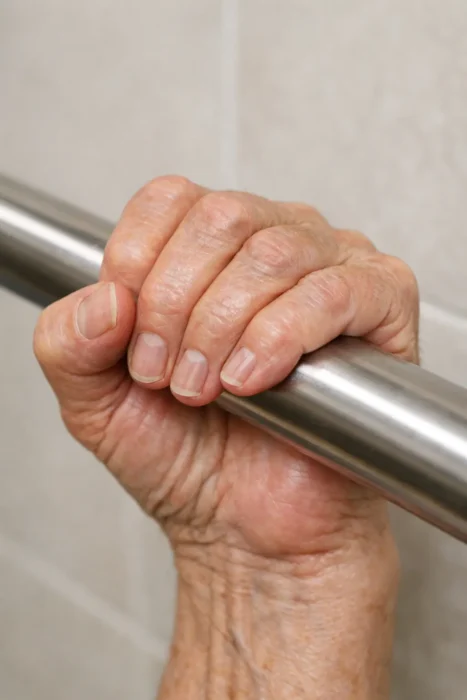
Grab bars (sometimes called “safety bars” or “support bars”) are wall-mounted handles installed in showers, bathtubs, and near toilets to help people maintain balance and prevent falls. For seniors — especially those with mobility challenges, balance issues, or cognitive impairments — grab bars are often the difference between a safe shower and a life-threatening fall.
According to the Centers for Disease Control and Prevention (CDC), falls are the leading cause of injury-related death among adults 65 and older. Bathroom falls are among the most common and most serious. A hip fracture suffered in a slippery shower — particularly one with no grab bar — can trigger a cascade of complications that proves fatal.
Senior living facilities have a legal duty to prevent foreseeable falls. Missing or inadequate grab bars are a textbook example of a foreseeable hazard.
Federal Law: ADA Grab Bar Requirements
The Americans with Disabilities Act (ADA) and its companion standards — the ADA Standards for Accessible Design — establish the federal floor for grab bar requirements in any commercial or public-use facility. Senior living communities of all types (nursing homes, assisted living facilities, personal care homes) are covered.
ADA Grab Bar Placement by Shower Type
Transfer Showers (36″ × 36″)
- Grab bars must run the full depth of the control wall.
- Grab bar on the back wall must extend at least 18 inches from the control wall.
- No obstruction of the entry or seat.
Standard Roll-In Showers (30″ × 60″)
- When a seat is provided: grab bars on the back wall and on the side wall opposite the seat.
- Without a seat: grab bars required on three walls.
Alternate Roll-In Showers (36″ × 60″)
- Grab bars required on the back wall and the side wall farthest from the entry.
ADA Technical Specifications
- Height: 33 to 36 inches from the shower floor.
- Clearance: 1.5 inches between the grab bar and the wall.
- Load capacity: Must support a minimum of 250 pounds at any point on the bar, fastener, mounting device, or supporting structure.
- Surface: Slip-resistant gripping surface with rounded, non-abrasive edges.
- Hardware: Corrosion-resistant materials required.
⚠️ Important: Reinforced walls for future grab bar installation do not satisfy the requirement for an occupied, operational shower in a senior living facility. The bars must be in place and must meet all technical specifications.
Georgia State Requirements for Senior Living Facilities
In addition to federal ADA requirements, Georgia imposes its own layer of regulation through the Georgia Department of Community Health (DCH). The DCH administers licensing rules for personal care homes and assisted living communities under Chapter 111-8-62 and Chapter 111-8-63 of the Georgia Rules and Regulations.
These state rules establish minimum standards for resident safety — including physical plant requirements for bathrooms and common areas. They must be read alongside the International Building Code (IBC), which Georgia has adopted and which incorporates accessible design standards for new construction and renovations.
Key Georgia-Specific Legal Points
- DCH Violations as Evidence of Negligence: Under O.C.G.A. § 31-7-3.2(i), Georgia courts are required to take judicial notice of DCH rules and admit them into evidence when relevant to a harm alleged in the complaint. This means a documented grab bar code violation can go directly to a jury as evidence that the facility breached its duty of care.
- OBRA Compliance: Georgia nursing homes that accept Medicare or Medicaid must comply with the federal Omnibus Budget Reconciliation Act (OBRA), which mandates a safe physical environment and adequate fall prevention measures, including bathroom safety features.
- Duty to Assess Fall Risk: Georgia law requires facilities to individually assess each resident’s fall risk and implement appropriate preventive measures. For a resident identified as a fall risk, failure to provide grab bars in the shower could independently constitute negligence.
- Statute of Limitations: In Georgia, personal injury claims against a nursing home or assisted living facility must generally be filed within two years of the date the injury was discovered or should have been discovered. Wrongful death claims must be filed within two years of the date of death. Do not wait.
When a Facility’s Failure Becomes a Lawsuit
Georgia law imposes a clear duty of care on every senior living facility — nursing homes, assisted living communities, and personal care homes alike. To succeed in a negligence claim, your attorney must establish:
- Duty: The facility owed your loved one a duty to maintain a safe environment.
- Breach: The facility failed to install, maintain, or properly position grab bars as required by law.
- Causation: That failure was a direct and proximate cause of your loved one’s injury.
- Damages: Your loved one suffered actual harm — physical injury, medical bills, pain and suffering, or death.
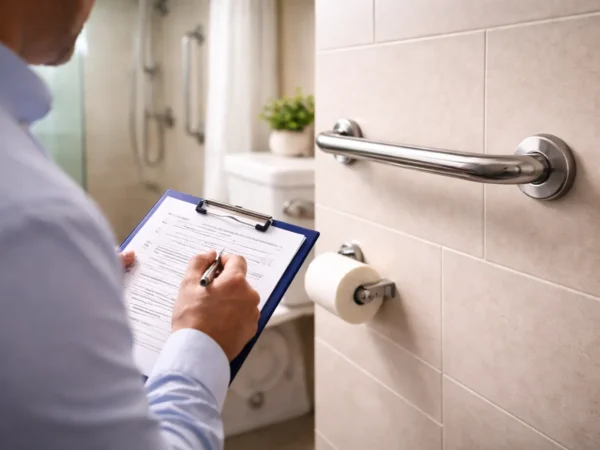
Grab bar cases are particularly strong because the violation is often documented and undeniable. An inspection report, a photograph, a facility maintenance log, or even a DCH complaint record can establish that the bar was missing, broken, or non-compliant. The harder work is linking that deficiency to the specific fall — but experienced personal injury attorneys know how to build that case.
Who Can Be Held Liable?
- The nursing home or assisted living facility itself
- The management company that operates the facility
- A contractor or maintenance company responsible for bathroom safety equipment
- In some cases, the property owner if different from the operator
What Compensation Can Victims Recover?
- Past and future medical expenses
- Pain and suffering
- Disability and loss of enjoyment of life
- Costs of transfer to a new, safer facility
- In wrongful death cases: the full value of the decedent’s life under Georgia’s wrongful death statute (O.C.G.A. § 51-4-2)
- In egregious cases: punitive damages
How to Document a Grab Bar Injury at a Georgia Senior Living Facility
If your loved one has been injured, swift action is critical to preserving the evidence that supports your claim.
- Photograph everything immediately: The shower stall, the walls where grab bars are (or are not) present, the floor surface, and your loved one’s injuries.
- Request the facility’s incident report: Under Georgia law, you are generally entitled to this record.
- Obtain complete medical records: From the facility and any hospital or rehab center that treated your loved one.
- Report to the DCH: File a complaint with the Georgia Department of Community Health. An investigation can produce official findings that support your civil case.
- Talk to witnesses: Other residents, family members of other residents, and current or former staff may have crucial information.
- Call a personal injury lawyer immediately: The statute of limitations clock starts running at the time of injury. Call Haug Barron Law Group before evidence disappears.
Have Questions About a Nursing Home or Assisted Living Injury in Georgia?
If your loved one was hurt in a shower fall at a senior living facility, understanding your legal rights under Georgia and federal law is the critical first step. Whether you have questions about negligence claims, the statute of limitations, or what compensation may be available, our Frequently Asked Questions page offers clear, authoritative guidance to help your family take informed action.
If your loved one was injured in a shower fall at a Georgia senior living facility due to missing or non-compliant grab bars, the facility may have violated both federal and state law — and your family may be entitled to significant compensation. At Haug Barron Law Group, our attorneys know how to document these violations, build a compelling case, and hold negligent facilities fully accountable. Contact us today for a free consultation and act quickly before critical evidence disappears.
This article is provided for general informational purposes only and does not constitute legal advice. No attorney-client relationship is formed by reading this content. For advice specific to your situation, please contact Haug Barron Law Group directly.
Contact Haug Barron Law Group Today for a FREE Consultation.