
Summer Camp Injuries in Georgia: Negligence, Supervision, and Liability
Summer Camp Injuries in Georgia: What Every Parent Must Know
Every summer, thousands of Georgia families send their children to day camps, overnight camps, sports camps, and specialty programs across metro Atlanta, the North Georgia mountains, and communities statewide.
Parents trust these organizations to provide a safe, structured, and supervised environment. But when camps fail in that duty — when staff are undertrained, facilities are unsafe, or supervision is inadequate — children suffer serious, sometimes fatal injuries.
If your child was injured at a summer camp in Georgia, you have legal rights. At Haug Barron Law Group, Personal Injury Lawyers, our Atlanta-based team has earned a reputation as one of Georgia’s premier plaintiff-only personal injury firms. We do not represent insurance companies or corporations. We fight exclusively for injured children and their families — and we have the verdicts and settlements to prove it.
Why Haug Barron Law Group Is Georgia’s Top Choice for Summer Camp Injury Cases
- AV Preeminent® Rated by Martindale-Hubbell — the highest possible peer-review distinction for legal ability and ethical standards
- Georgia Super Lawyers® 2025–Present — recognizing only the top 5% of attorneys in the state; Rising Star through 2024
- Co-counsel on a $30 Million Wrongful Death Verdict in DeKalb County, Georgia (James R. Haug and Colin A. Barron)
- Multiple multi-million-dollar verdicts and settlements in catastrophic injury and wrongful death cases across Georgia
- Member of the Georgia Trial Lawyers Association and the AAJ Trucking Litigation Group
- Offices in Atlanta, Sandy Springs, and Decatur — serving clients throughout all of Georgia
- Plaintiff-only firm — we never represent insurance companies or corporations
The Legal Framework: Summer Camp Liability in Georgia
Georgia’s Duty of Care for Camps and Youth Programs
Under Georgia law, summer camps owe a duty of reasonable care to the children in their custody. This duty encompasses adequate supervision, safe facilities, proper screening of staff, appropriate activity design, and emergency preparedness. When a camp falls below the standard of care and a child is injured, that camp — and potentially its individual staff members, parent organization, and insurers — may be held legally liable.
Key Georgia statutes and legal principles that govern summer camp injury cases include O.C.G.A. § 51-1-2 (Georgia’s general negligence standard), O.C.G.A. § 51-1-4 (liability for negligence causing injury to another), O.C.G.A. § 20-2-301 et seq. (background check requirements for employees working with minors), and regulations from the Georgia Department of Early Care and Learning (DECAL) for licensed childcare providers. American Camp Association (ACA) safety standards are also used to establish the industry standard of care.
Types of Summer Camps and Liability Exposure
- Private for-profit camps — fully subject to civil negligence claims
- Non-profit and religiously affiliated camps — subject to suit despite charitable status under Georgia law
- Municipality-run parks and recreation programs — require ante litem notice under O.C.G.A. § 36-33-5 before filing suit; strict deadlines apply
- School-affiliated summer programs — may implicate sovereign immunity and require compliance with Georgia Tort Claims Act provisions
- Sports academies and specialty camps — governed by same negligence principles with additional sports activity liability considerations
Common Summer Camp Injuries in Georgia
Traumatic Brain Injury (TBI) and Head Trauma
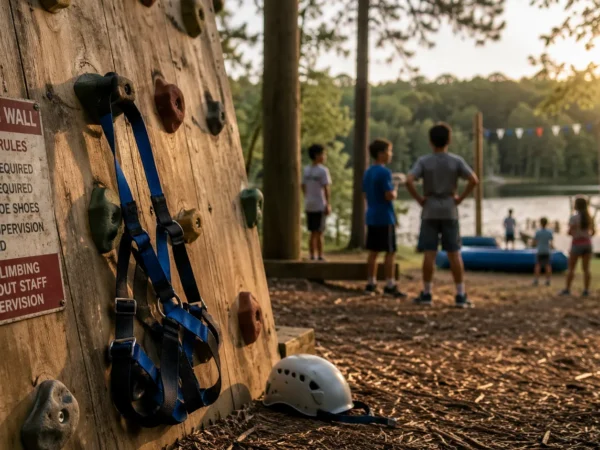
Falls from climbing walls, zip lines, rope courses, and playground equipment are among the most frequent causes of TBI at Georgia summer camps. Inadequate helmet policies, unsupervised activity areas, and poorly maintained equipment all contribute to preventable head injuries.
Drowning and Near-Drowning
Water activities — swimming pools, lakes, and water sports — carry significant risk when camps fail to provide qualified lifeguards, enforce swimmer-to-lifeguard ratios, or maintain properly fenced aquatic areas. Georgia law imposes heightened duties on operators of swimming pools and water attractions.
Heat Stroke and Heat-Related Illness
Georgia summers bring dangerous heat. Camps that fail to implement heat safety protocols, provide adequate hydration, or recognize early signs of heat exhaustion and heat stroke can be held liable for serious injury or death.
Sexual Abuse and Molestation
Child sexual abuse at summer camps is a devastating reality. Camps that fail to conduct thorough background checks on staff, implement proper supervision policies, or respond appropriately to warning signs can be held liable under both negligent hiring and negligent supervision theories. Georgia law provides civil remedies for survivors of sexual abuse, and the statute of limitations for child sexual abuse claims is extended under Georgia law.
Sports and Recreational Activity Injuries
Broken bones, spinal injuries, torn ligaments, and concussions frequently result from improperly supervised sports activities, defective equipment, or unsafe playing surfaces. Assumption of risk is a defense camps may raise — but it does not shield camps from liability for negligence.
Food Allergy Reactions and Medical Negligence
Camps that fail to maintain proper records of a child’s allergies, administer medication incorrectly, or delay emergency medical response can face serious liability for anaphylaxis, medication errors, and related injuries.
Bullying-Induced Injury and Negligent Supervision
When camp staff are inadequately trained to prevent or respond to bullying, physical altercations between campers can result in serious injury. Georgia courts recognize negligent supervision as a viable theory of liability in these cases.
Wrongful Death
Tragically, some camp accidents are fatal. Haug Barron Law Group handles wrongful death claims on behalf of devastated Georgia families, pursuing every avenue of compensation available under O.C.G.A. § 51-4-1 et seq., including the full value of the child’s life.
Proving Negligence in a Georgia Summer Camp Injury Case
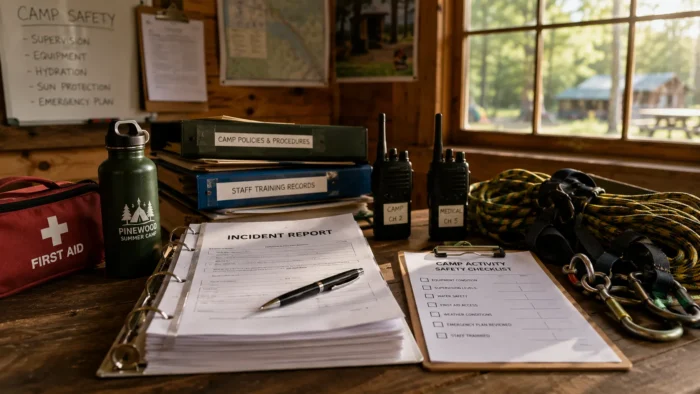
To succeed in a summer camp injury claim, an experienced Georgia personal injury attorney must establish four legal elements: duty (the camp owed your child a legal duty of care), breach (the camp failed to meet the standard of care), causation (the breach directly caused your child’s injury), and damages (your child and your family suffered actual, quantifiable harm). Negligence claims against summer camps require immediate, thorough investigation — critical evidence including surveillance video, staff logs, incident reports, ACA inspection records, and employee personnel files can be lost or destroyed if action is not taken quickly.
Compensation Available in Georgia Summer Camp Injury Cases
Economic Damages
- Past and future medical expenses (hospitalization, surgery, rehabilitation, therapy)
- Costs of future medical care and long-term disability support
- Lost earning capacity (for children with permanent disabilities)
- Mental health counseling and psychological treatment
Non-Economic Damages
- Physical pain and suffering
- Emotional distress and trauma
- Loss of enjoyment of life
- Disfigurement and permanent scarring
- Loss of consortium (for parents in certain circumstances)
Punitive Damages & Wrongful Death
Where a camp’s conduct is especially egregious — such as knowingly employing a sexual predator or covering up a dangerous condition — Georgia law permits an award of punitive damages under O.C.G.A. § 51-12-5.1. Under O.C.G.A. § 51-4-2, the parents of a deceased child may recover the full value of the child’s life. Haug Barron Law Group has recovered tens of millions of dollars for Georgia families who have lost loved ones through the negligence of others.
What to Do If Your Child Is Injured at a Georgia Summer Camp
- Seek immediate medical attention. Even if the injury appears minor, have your child evaluated by a qualified medical professional. Concussions, internal injuries, and heat stroke can worsen rapidly without treatment.
- Document everything. Take photographs of the injury, the accident location, and any dangerous conditions you observe. Collect names and contact information for witnesses, other campers, and camp staff.
- Request the incident report. Demand a copy of the camp’s official incident report. Do not sign any release of liability or settlement offer without first consulting an attorney.
- Preserve evidence. Save clothing, equipment, and any physical evidence related to the accident. Do not allow the camp to alter the scene.
- Contact Haug Barron Law Group immediately. Call (844) HAUG-LAW / 844-428-4529 for a free, confidential consultation. Time is critical in summer camp injury cases.
Georgia Statute of Limitations: Do Not Wait
Georgia’s general statute of limitations for personal injury claims is two years from the date of injury under O.C.G.A. § 9-3-33. However, important exceptions apply: claims against government entities (city-run parks and recreation camps) require ante litem notice within six months under O.C.G.A. § 36-33-5; claims on behalf of minors may toll (pause) the limitations period until the child turns 18 under O.C.G.A. § 9-3-90; and child sexual abuse claims carry extended limitations periods under Georgia’s CARES Act provisions. These deadlines are unforgiving — contact Haug Barron Law Group as soon as possible.
Was Your Child Injured at a Georgia Summer Camp?
Visit our Summer Camp Injury FAQs to learn about camp negligence, supervision standards, liability waivers, and what compensation your family may recover after a child suffers a serious injury at a Georgia day camp, overnight camp, or sports program.
If your child was seriously injured — or killed — at a Georgia summer camp due to negligent supervision, unsafe conditions, inadequate staffing, or sexual abuse, a plaintiff-only firm with the investigative resources, child injury expertise, and $30 million wrongful death verdict record to hold every responsible party fully accountable is your family’s strongest ally in protecting your child’s rights and future. Contact Haug Barron Law Group today for a free, confidential consultation — no fee unless we win.
This article is written and published by Haug Barron Law Group, Personal Injury Lawyers, for general informational purposes only. It does not constitute legal advice and does not create an attorney-client relationship. Past results do not guarantee future outcomes. The $30 million wrongful death verdict in DeKalb County was obtained by James R. Haug and Colin A. Barron as co-counsel. Georgia residents seeking legal advice should consult a licensed Georgia attorney. © 2025 Haug Barron Law Group | www.hblg.law
Contact Haug Barron Law Group Today for a FREE Consultation.