
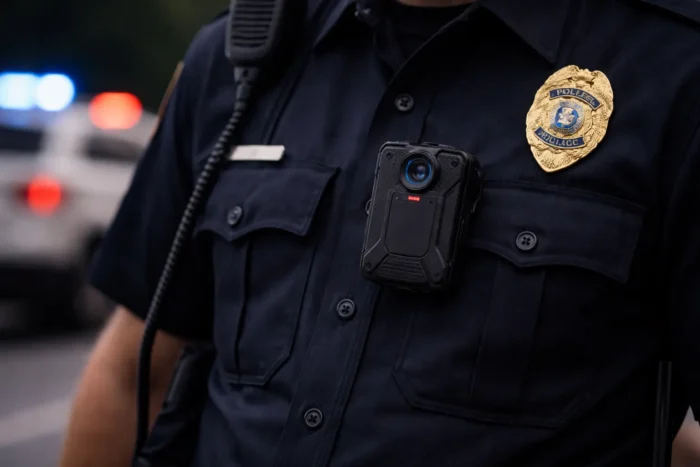
Georgia SB 482: How It Could Block Injury Victims’ Access to Body Cam Footage

SB 482 Blocks Police Body Cam Access: A bill moving through the Georgia Legislature would gut the public’s ability to obtain police body camera footage — stripping a critical tool from injury victims, families of the deceased, and the attorneys who fight for them.
What Is Georgia Senate Bill 482?
Georgia Senate Bill 482 is legislation moving through the final days of the 2026 legislative session that would impose sweeping new restrictions on public access to police body camera footage and dashboard camera video under the Georgia Open Records Act, O.C.G.A. § 50-18-70 et seq. The bill passed the Georgia Senate unanimously on crossover day — an exceptionally rushed period in the legislative calendar — and now awaits hearings before the House Public Safety and Homeland Security committee.
The bill was introduced by Sen. Brian Strickland (R-McDonough), who is also running to become Georgia’s Attorney General. If elected, Strickland would be directly responsible for upholding and enforcing the Open Records Act — the very law his bill would fundamentally undermine. Voters and injury victims across Georgia should weigh that fact carefully.
According to an op-ed published in the Georgia Recorder by law students at the University of Georgia School of Law: “For years, taxpayers across Georgia have bankrolled law enforcement video operations as a way to increase government transparency and police accountability. But if Georgians can’t readily access police videos, what was the point of spending millions in tax dollars to enable them?”
At Haug Barron Law Group, Personal Injury Lawyers, we represent Georgia citizens who have been injured through the negligence of others — and we know firsthand how essential access to police video can be in building a civil case for damages. This bill, if passed in its current form, would create enormous obstacles for victims at the worst possible time in their lives.
What SB 482 Would Actually Do
The bill’s stated purpose is narrow: to prevent predatory “mugshot mill” websites from profiting off arrest photographs. That is a legitimate concern. But buried in the legislation are four words — “or law enforcement video” — that dramatically expand its scope and threaten meaningful police accountability across Georgia.
Here is what SB 482 would require of anyone seeking police body camera or dashcam footage:
- Name Everyone in the Video First. Requesters must provide the full name of every person depicted in the footage — or the approximate date, time, and location of the incident. As the Georgia First Amendment Foundation has explained, this creates a logical impossibility: you must already know who is in the video before you can request it. Bystanders, witnesses, and unknown parties present at the scene make this requirement unworkable in many real-world situations.
- Appear in Person With a Notarized Affidavit. Requesters would be required to appear in person at the releasing agency — making electronic requests, which are currently permitted under the ORA, unavailable. For journalists and attorneys covering incidents on the other side of the state, that could mean a five-hour round trip simply to file paperwork.
- Request Each Video Individually. Every video, even if it documents the same single event, must be requested separately. A multi-officer response to one incident involving five body cameras would require five separate in-person notarized requests.
- Press Exemptions Are Severely Limited. Only credentialed members of the Georgia Press Association and the Georgia Association of Broadcasters would be exempt. Online news outlets, nonprofit newsrooms, and independent journalists — the fastest-growing segment of the news ecosystem — would face the same restrictions as everyone else, at a time when Pew Research shows 56% of Americans get their news primarily from digital platforms while only 7% regularly read print newspapers.
- Agencies Could Redact Footage Showing Misconduct. The bill would allow the releasing agency to redact videos to conceal victims and witnesses of police violence. This provision raises serious questions about who controls the narrative in cases of alleged police misconduct — and whether agencies could use this authority to obscure accountability.
- Extra Barriers for Families of the Deceased. If the footage depicts a death — such as a police shooting — even close relatives must provide formal documentation verifying their relationship to the deceased before obtaining the video. Grieving families would face a bureaucratic process at the moment they most need answers.
“In order to get this footage, you have to name everybody who’s in it. But before you see it, you don’t know who those people are.” — Sarah Brewerton-Palmer, Georgia First Amendment Foundation
The ORA Already Protects What Needs Protecting
Supporters of SB 482 argue the bill is necessary to protect innocent people. But Georgia law already provides the safeguards they describe. Under the existing Open Records Act, agencies may already refuse to release footage that is part of an active law enforcement investigation, and release is already restricted for video recorded in locations where there is a reasonable expectation of privacy, such as inside a private home. Georgia law also already makes it illegal for mugshot websites to charge subjects for removal of images (O.C.G.A. § 16-9-95).
SB 482 goes far beyond these measured protections. As Blake Feldman, senior policy counsel with the Southern Center for Human Rights, put it: it raises a serious red flag when “a law enforcement agency that wields incredible authority to stop and detain people and discharge firearms at people” seeks to withhold footage from body-worn cameras.
How SB 482 Directly Harms Georgia Injury Victims
At Haug Barron Law Group, Personal Injury Lawyers, we represent Georgians who have been seriously injured — in motor vehicle accidents, commercial trucking crashes, premises liability incidents, and cases involving police use of force. Police video is frequently among the most important evidence we obtain when building a civil claim for damages.
Vehicle Accident Cases
When police respond to the scene of a car or truck accident, dashcam and body camera footage can capture the position of vehicles, road conditions, driver behavior, witness statements, and early admissions before parties have had time to consult counsel or adjust their accounts. This footage can be decisive in establishing liability — particularly in disputed-fault cases where the at-fault party’s insurer is aggressively contesting responsibility.
Use-of-Force and Civil Rights Claims
Georgia citizens who have been injured during encounters with law enforcement rely on body camera footage as the primary objective record of what occurred. Under SB 482, obtaining that footage would require victims — or their attorneys — to name everyone depicted before ever seeing the video. In confrontational encounters that unfold rapidly, with multiple officers and unknown bystanders present, this requirement would make obtaining the footage practically impossible in many cases.
Wrongful Death Cases
When a Georgia family loses a loved one in a police encounter, the body camera footage is often the only unbiased record of the final moments of that person’s life. The additional documentation requirements SB 482 imposes on families seeking this footage is, at its core, forcing grieving relatives to jump through bureaucratic hoops when they are least equipped to do so. Our firm has handled wrongful death cases in Georgia, and we know how critical timely access to evidence is — especially given applicable statutes of limitations.
Evidence Preservation and the Litigation Timeline
Georgia personal injury litigation operates under strict time constraints. The general statute of limitations for personal injury is two years under O.C.G.A. § 9-3-33, and cases involving government entities often carry even shorter notice requirements. Delays caused by burdensome ORA request processes — multiple in-person trips, per-video filings, notarized affidavits — could cost victims access to evidence that no longer exists by the time it is finally released.
Why This Matters Right Now: SB 482 is currently in the Georgia House of Representatives. The 2026 session is in its final days. If you believe police body camera footage matters for government accountability and for the rights of injured Georgians, contact your state representative now. The Senate passed this bill unanimously on a rushed crossover deadline — the House is the last opportunity for meaningful review.
How Did This Pass the Senate Without Scrutiny?
One of the most troubling aspects of SB 482 is the procedural context of its passage. The Senate voted unanimously in favor on crossover day — the legislative deadline for bills to move between chambers, typically one of the busiest and most chaotic days of any session. Lawmakers vote on hundreds of bills in rapid succession, with little opportunity to read new or amended language.
The bill originally targeted only mugshot websites. The expansion to include “law enforcement video” was added through amendment. At least one Democratic co-sponsor, Sen. Kenya Wicks (D-Fayette), later confirmed she was unaware the amended language included police video at all.
The Georgia House Public Safety and Homeland Security committee now has an opportunity to scrutinize this legislation with the attention it deserves — and to reject or substantially amend a provision that would set back police accountability in Georgia for years.
What Georgia Citizens Can Do
If you believe in open government and police accountability, contact your Georgia House representative directly. Tell them you oppose SB 482 in its current form. Point them to the coverage in the Georgia Recorder, the Atlanta Journal-Constitution, and reporting by WABE and The Current GA. Find your representative at house.ga.gov.
And if you or a family member has been injured in an incident where police video may be relevant evidence, do not wait. The sooner a qualified Georgia personal injury attorney can submit an Open Records Act request and take steps to preserve video evidence, the better — particularly before any legislative changes take effect or the footage is overwritten.
Contact Haug Barron Law Group
Haug Barron Law Group, Personal Injury Lawyers, is a plaintiff’s-only personal injury firm based in Atlanta, Georgia, with offices in Sandy Springs and Decatur. We represent injured Georgians and their families — and we never represent insurance companies or defendants.
If you have been injured and need an attorney who knows how to obtain, preserve, and use police body camera and dashcam evidence in your civil case, call us today for a free, no-obligation case review.
Your Case. Your Evidence. Your Rights. Police video evidence can make or break a personal injury or wrongful death claim. Don’t wait — contact Haug Barron Law Group today for a free case review. Call | (844) 428-4529 | www.hblg.law
Have questions about police body camera evidence in injury cases?
Visit our Georgia Injury Claim FAQs to learn how access to evidence affects your case, what rights you have, and what steps to take after an incident.
How can I get help with a personal injury case involving police video in Georgia?
Proposed laws limiting access to police body camera footage can directly impact injury victims’ ability to prove their cases. Contact Haug Barron Law Group to discuss your rights and protect your claim.
This article is for informational purposes only and does not constitute legal advice. Reading this article does not create an attorney-client relationship. If you have been injured, consult a licensed Georgia attorney about your specific circumstances.
Contact Haug Barron Law Group Today for a FREE Consultation.