
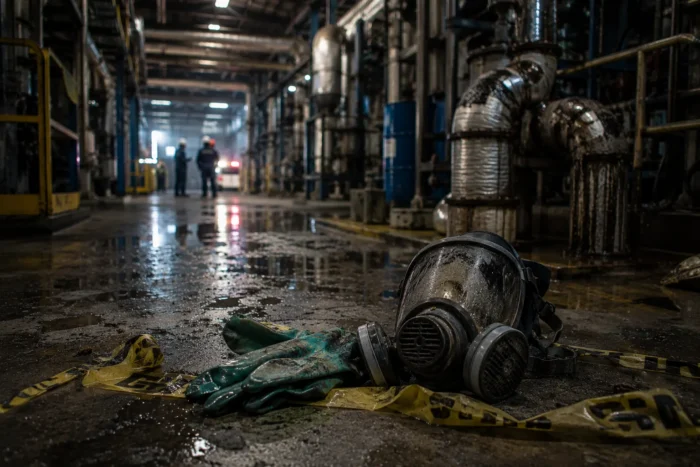
Chemical Exposure Injuries at Georgia Factories — Long-Term Liability Claims
The Hidden Epidemic: Chemical Exposure at Georgia’s Industrial Workplaces
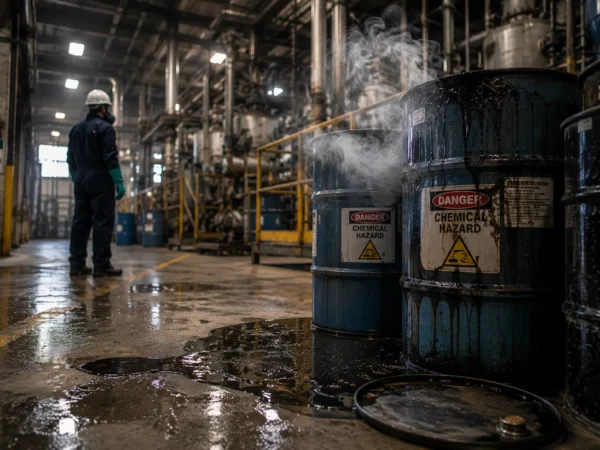
Factory Chemical Exposure: Georgia is home to hundreds of factories, chemical plants, warehouses, and industrial facilities. Every day, workers across metro Atlanta, Sandy Springs, Decatur, and beyond report to jobs that silently expose them to hazardous chemicals — benzene, asbestos, silica, ammonia, heavy metals, pesticides, and industrial solvents that can cause devastating long-term injuries, chronic illness, and death.
Workers’ compensation typically provides only a fraction of what victims truly deserve. But many chemical exposure victims have a second — and often far more powerful — legal avenue: a third-party personal injury or wrongful death claim against the chemical manufacturer, equipment supplier, premises owner, or contractor responsible for the exposure.
At Haug Barron Law Group, Personal Injury Lawyers, we are widely regarded as one of Georgia’s top plaintiff’s personal injury firms. We represent injured workers and the families of those killed by toxic chemical exposure — and we fight for every dollar they are owed.
What Is a Third-Party Workplace Injury Claim in Georgia?
In Georgia, injured workers generally cannot sue their direct employer due to the exclusivity provisions of the Georgia Workers’ Compensation Act (O.C.G.A. § 34-9-11). However, that limitation does not apply to third parties — entities other than the employer who contributed to the worker’s injury. A third-party claim allows a seriously injured worker (or the family of a deceased worker) to pursue full compensatory and punitive damages directly against the negligent third party, resulting in dramatically larger recoveries than workers’ compensation alone.
Common Third Parties in Georgia Factory Chemical Exposure Cases
- Chemical manufacturers and distributors who failed to warn of known hazards
- Equipment and machinery manufacturers who designed defective safety systems
- General contractors and subcontractors on multi-employer job sites
- Property owners who allowed hazardous conditions on their premises
- Staffing and temp agencies whose workers are placed in toxic environments
- Maintenance and inspection companies that missed or ignored safety defects
- HVAC/ventilation contractors who failed to prevent toxic buildup
Dangerous Chemicals Commonly Found in Georgia Factories
Benzene
Benzene is a known human carcinogen linked to leukemia, lymphoma, and aplastic anemia. It is found in petroleum products, paint thinners, adhesives, and rubber manufacturing. Georgia workers in auto body shops, chemical plants, and refineries face significant exposure risks. OSHA’s permissible exposure limit (PEL) is just 1 ppm over 8 hours. Learn more at the CDC’s benzene toxicology profile.
Asbestos
Despite being heavily regulated, asbestos remains present in many older Georgia industrial buildings, insulation systems, and pipe fittings. Mesothelioma — the deadly cancer caused exclusively by asbestos exposure — has a latency period of 20–50 years, meaning victims often don’t realize they were harmed until decades later. See OSHA’s asbestos standards.
Silica Dust
Workers in Georgia’s construction material plants, quarries, and countertop fabrication facilities face exposure to crystalline silica dust, which causes silicosis — an irreversible, often fatal lung disease. The rise of engineered stone fabrication has dramatically increased silicosis cases among younger workers.
Ammonia and Industrial Solvents
Anhydrous ammonia, commonly used in refrigeration systems and food processing plants, can cause severe chemical burns, pulmonary edema, and death in high concentrations. Industrial solvents including toluene, xylene, methylene chloride, and TCE are associated with liver and kidney damage, neurological disorders, and cancer.
Heavy Metals: Lead, Cadmium, Chromium, Mercury
Battery plants, metal finishing operations, and electronics recycling facilities frequently expose workers to toxic heavy metals. Chronic lead exposure causes neurological damage, cardiovascular disease, and reproductive harm. Hexavalent chromium is a potent carcinogen linked to lung cancer.
Pesticides and Agricultural Chemicals
Agribusiness workers and landscapers in Georgia’s rural and suburban counties are frequently exposed to organophosphates, herbicides, and fungicides that cause nervous system damage, cancer, and endocrine disruption.
Establishing Liability in a Georgia Chemical Exposure Case
Products Liability: Failure to Warn and Design Defects
Under Georgia’s strict products liability statute (O.C.G.A. § 51-1-11), a manufacturer that places a defective or unreasonably dangerous product into the stream of commerce can be held strictly liable for injuries it causes — even without proof of negligence. Chemical companies that fail to include adequate Safety Data Sheets (SDS), fail to label toxic containers, or market products known to be carcinogenic without warning face significant exposure under this theory.
Premises Liability
Factory and property owners in Georgia have a non-delegable duty under O.C.G.A. § 51-3-1 to maintain their premises in a reasonably safe condition for invitees, which includes contractor employees, temporary workers, and delivery personnel. When a factory owner knows of a toxic hazard — a chemical spill, inadequate ventilation, or corroding tanks — and fails to remediate it, they can be held liable for resulting injuries.
Negligence of Contractors and Subcontractors
In multi-employer work sites — common in Georgia’s construction, industrial maintenance, and petrochemical industries — a general contractor or specialty subcontractor who creates or fails to abate a toxic hazard can be liable to all workers on the site, regardless of who directly employed them. Georgia courts have repeatedly held that general contractors owe a duty of care to all foreseeable workers on site.
OSHA and Regulatory Violations as Evidence of Negligence
Violations of OSHA’s Hazard Communication Standard (29 C.F.R. § 1910.1200), Process Safety Management regulations (29 C.F.R. § 1910.119), or specific chemical exposure standards such as 29 C.F.R. § 1910.1028 for benzene are powerful evidence of negligence per se in a Georgia civil case. We routinely request OSHA inspection records, violation citations, and fatality investigation reports through the Freedom of Information Act and Georgia Open Records Act (O.C.G.A. § 50-18-70).
Damages Available in a Georgia Third-Party Chemical Exposure Claim
- All past and future medical expenses, including cancer treatment, hospitalization, surgery, and rehabilitation
- Lost wages and full loss of future earning capacity
- Pain, suffering, and mental anguish — both past and future
- Loss of consortium and companionship for spouses and family members
- Disfigurement and permanent disability
- Wrongful death damages under O.C.G.A. § 51-4-2, including the full value of the deceased’s life
- Estate claims for medical and funeral expenses under O.C.G.A. § 51-4-5
- Punitive damages up to $250,000 (or unlimited in product liability cases) where the defendant acted with conscious disregard for human life
Georgia Statute of Limitations for Chemical Exposure Claims
Georgia’s general statute of limitations for personal injury claims is two years from the date of injury under O.C.G.A. § 9-3-33. Wrongful death claims must also be filed within two years of the date of death.
Chemical exposure cases often involve the discovery rule: the statute of limitations may not begin to run until the victim knew or reasonably should have known of the injury and its connection to chemical exposure. This is particularly important for latent diseases like mesothelioma, silicosis, or occupational cancer that may not manifest for years or decades. Do not assume it is too late — contact Haug Barron Law Group immediately for a free case evaluation.
For claims against government-owned facilities, Georgia’s ante litem notice requirements (O.C.G.A. § 36-33-5 for municipalities; O.C.G.A. § 50-21-26 for the state) impose strict pre-lawsuit notice deadlines that can be as short as 6–12 months. Missing an ante litem deadline is fatal to your claim.
How Haug Barron Law Group Builds Your Chemical Exposure Case
- Immediate Evidence Preservation — We issue spoliation letters to the factory owner, employer, chemical supplier, and any other potential defendant the moment we are retained. Under Georgia law, a party that destroys evidence after receiving a spoliation notice can face sanctions, adverse inferences, and even case-dispositive remedies.
- OSHA and Regulatory Records — We obtain OSHA inspection reports, industrial hygiene data, chemical inventory records, and any regulatory violations from Georgia EPD, EPA, or OSHA.
- Expert Witnesses — We retain industrial hygienists, toxicologists, occupational medicine physicians, and economic experts who can connect your specific diagnosis to the chemical exposure at your workplace and quantify your damages.
- Medical Records and Causation Evidence — We gather your complete medical history, obtain opinions from your treating physicians, and work with independent medical experts to establish the causal link between your chemical exposure and your diagnosis.
- Aggressive Litigation and Trial Readiness — At Haug Barron Law Group, we are trial lawyers first. We do not settle cases for less than they are worth. Our $30 million DeKalb County verdict is a testament to what happens when corporate negligence meets a fully prepared Georgia trial team.
Why Haug Barron Law Group Is Georgia’s Choice for Chemical Exposure and Wrongful Death Cases
- $30 Million Wrongful Death Verdict in DeKalb County (James R. Haug & Colin A. Barron, jointly)
- Multiple additional million-dollar verdicts and multi-million-dollar settlements
- AV Preeminent® Rated by Martindale-Hubbell® — the highest peer-review distinction in the legal profession
- Super Lawyers® 2025 — recognition awarded to fewer than 5% of Georgia attorneys
- Georgia Trial Lawyers Association member
- American Association for Justice (AAJ) Trucking Litigation Section member
- Exclusive plaintiff’s representation — we never represent corporations or insurance companies
- Contingency fee only — no fee unless we recover for you
- Offices in Atlanta, Sandy Springs, and Decatur — serving all of Georgia
Have Questions About a Chemical Exposure Injury Claim in Georgia?
Visit our Chemical Exposure FAQs to learn about third-party liability, toxic tort claims, what damages you can recover, and your legal rights after a factory chemical exposure causes serious illness or wrongful death in Georgia.
If you or a loved one has been diagnosed with cancer, a chronic illness, or a catastrophic injury linked to chemical exposure at a Georgia factory or industrial facility — whether from benzene, asbestos, silica, heavy metals, or industrial solvents — a plaintiff-only firm with top-tier toxicology experts, the resources to take on Georgia’s largest corporations, and a $30 million wrongful death verdict record is your strongest ally in holding every responsible party fully accountable. Contact Haug Barron Law Group today for a free, confidential consultation — no fee unless we win.
This article was authored by James R. Haug, Esq., Founding Partner, Haug Barron Law Group, Personal Injury Lawyers, Atlanta, Georgia. © 2025 Haug Barron Law Group. For informational purposes only. Not legal advice. Reading this article does not create an attorney-client relationship.
Contact Haug Barron Law Group Today for a FREE Consultation.