
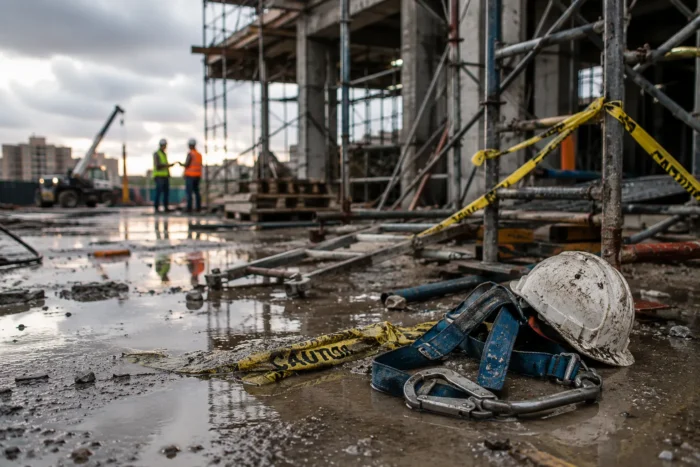
Construction Fall Accidents in Georgia: Scaffolding, Ladders, and Rooftops
Georgia’s Construction Fall Crisis: What Every Injured Worker and Family Must Know
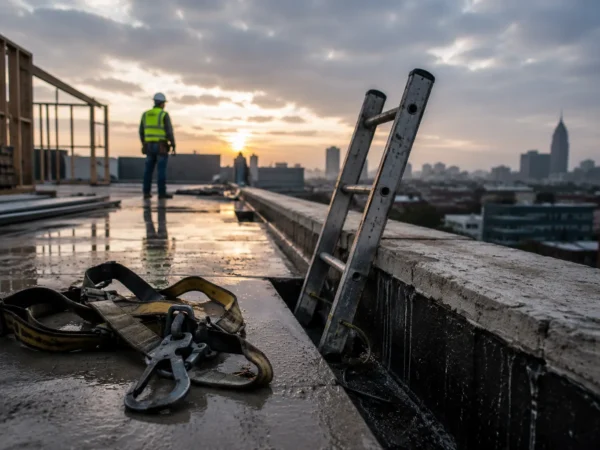
Georgia’s booming construction sector — from Atlanta’s midtown high-rises and I-285 interchange rebuilds to suburban residential developments in Cobb, Gwinnett, and Fulton Counties — generates one of the most dangerous work environments in the American South.
According to OSHA, falls are the single leading cause of death in the construction industry nationwide, accounting for more than one-third of all construction fatalities each year. In Georgia alone, hundreds of construction workers suffer life-altering fall injuries annually from scaffolding collapses, defective ladders, and unguarded rooftop edges.
If you or a family member was seriously injured — or killed — in a construction fall accident in Georgia, the question you must answer quickly is: who is legally responsible, and how do I pursue maximum compensation? The answer is almost never limited to a simple workers’ compensation claim. In the majority of serious construction fall cases, injured workers and grieving families have the right to pursue third-party personal injury or wrongful death lawsuits — claims that can recover damages far beyond what workers’ comp will ever pay.
Workers’ Compensation vs. Third-Party Lawsuits in Georgia
The Workers’ Compensation Limitation
Georgia’s Workers’ Compensation Act (O.C.G.A. § 34-9-1 et seq.) creates an exclusive-remedy framework: if your employer carries workers’ compensation insurance, you generally cannot sue your employer directly for a workplace injury. Workers’ comp pays medical bills and a portion of lost wages, but it does not compensate for pain and suffering, full lost earning capacity, or the full scope of your losses.
Why Third-Party Claims Are Critical for Construction Fall Victims
Construction sites are uniquely complex legal environments. Multiple parties — general contractors, subcontractors, property owners, equipment manufacturers, and scaffolding rental companies — all share legal responsibility for site safety. Under Georgia law, any of these parties who negligently caused or contributed to your fall can be sued independently in a third-party personal injury or wrongful death action. Key governing statutes include O.C.G.A. § 51-3-1 (premises liability), O.C.G.A. § 51-1-11 (product liability), OSHA 29 C.F.R. § 1926 (construction safety standards), O.C.G.A. § 51-2-5 (contractor liability), and Georgia’s Anti-Indemnity Statute, O.C.G.A. § 13-8-2.
Georgia follows a modified comparative fault rule (O.C.G.A. § 51-12-33). You can recover compensation as long as you are less than 50% at fault for the accident, with damages reduced proportionally by your percentage of fault.
Scaffolding Collapse and Fall Accidents in Georgia
OSHA estimates that scaffolding injuries affect approximately 4,500 workers annually and cause 60 deaths. In Georgia, scaffolding accidents frequently occur on commercial construction projects in Atlanta’s urban core, hospital and institutional construction, and bridge or highway projects managed by GDOT subcontractors.
Common Scaffolding Defects and Negligent Conditions
- Improper assembly by workers not trained or certified in scaffold erection
- Failure to install guardrails, mid-rails, and toeboards as required by OSHA 29 C.F.R. § 1926.451
- Scaffold planking that is inadequate, warped, or improperly secured
- Exceeding the scaffold’s rated load capacity
- Failure to brace and tie scaffolding to the structure at required intervals
- Defective scaffold components from the manufacturer (product liability)
- Failure to inspect scaffolding before each work shift
- Swing-stage scaffold cable failures
- Failure to provide and enforce personal fall arrest systems (PFAS) for scaffolds more than 10 feet above a lower level
Who Is Liable in a Georgia Scaffolding Accident?
- General Contractor: Under Georgia law and OSHA’s multi-employer worksite policy, general contractors who control the worksite can be held liable for scaffolding hazards even when a subcontractor erected the scaffold
- Scaffolding Subcontractor: The company that designed, erected, or was responsible for maintaining the scaffolding bears direct liability for defective assembly or maintenance failures
- Scaffold Rental Company: Companies that rent scaffolding equipment have duties to provide equipment that meets safety standards and to inspect for defects before delivery
- Scaffold Manufacturer: If a component was defectively designed or manufactured, Georgia’s strict products liability law (O.C.G.A. § 51-1-11) may hold the manufacturer liable regardless of fault
- Property Owner: Under O.C.G.A. § 51-3-1, the owner of the premises where construction occurs may bear independent liability for unsafe conditions
Ladder Fall Accidents in Georgia Construction
Ladders are involved in more construction fatalities than any other single piece of equipment. The Consumer Product Safety Commission estimates approximately 300 Americans die in ladder-related accidents each year. On Georgia construction sites — from residential framing in Cherokee County to commercial interior finishing in Midtown Atlanta — ladder falls cause traumatic brain injuries, spinal cord injuries, fractures, and fatal falls every year.
OSHA Standard 29 C.F.R. § 1926.1053 governs ladder use on construction sites. Critical requirements include that ladders must extend at least 3 feet above the upper landing surface; that the proper 4:1 angle must be maintained; that ladders must be free of structural defects; that each employee must be trained by a competent person in proper ladder use; and that portable ladders must be secured at the top and/or bottom to prevent movement. When these standards are violated and a worker is injured, multiple parties may be liable including the general contractor, the employer who failed to train, and the manufacturer of a defective ladder.
Rooftop Fall Accidents in Georgia: Residential and Commercial
Georgia’s residential roofing industry — fueled by new construction in Cherokee, Paulding, Forsyth, and Hall Counties, and constant storm-damage repair across metro Atlanta — employs tens of thousands of workers routinely exposed to unguarded roof edges, steep pitches, and unstable surfaces. OSHA’s Fall Protection Standards (29 C.F.R. §§ 1926.500–1926.503) require conventional fall protection for all workers on roofs 6 feet or more above a lower level, covers over all skylights, and warning line systems set back at least 6 feet from unprotected edges on low-slope roofs.
Rooftop fall cases frequently involve third-party liability from property owners who fail to disclose known hazards, general contractors who fail to enforce fall protection plans, equipment manufacturers who supply defective personal fall arrest harnesses or anchor points, and architects or engineers who design dangerous roof access conditions.
Catastrophic Injuries from Construction Falls: What Georgia Law Allows You to Recover
Types of Injuries
- Traumatic Brain Injury (TBI) — ranging from concussion to severe closed-head injuries with permanent cognitive, behavioral, and physical deficits
- Spinal Cord Injuries — including complete and incomplete paralysis (paraplegia and quadriplegia), requiring lifetime medical management and assistive care
- Vertebral Fractures — compression fractures and burst fractures that may require surgical fusion and leave permanent limitations
- Pelvis and Hip Fractures — often requiring multiple surgeries and lengthy rehabilitation
- Internal Organ Damage — falls from height can cause traumatic rupture of internal organs, requiring emergency surgery
- Multiple Orthopedic Fractures — shattered wrists, ankles, femurs, and other bones that may require hardware implantation
- Wrongful Death — when a construction fall proves fatal, Georgia’s Wrongful Death Act (O.C.G.A. § 51-4-1 et seq.) entitles the surviving spouse, children, or estate to pursue the full value of the deceased’s life
Damages Available in Georgia Third-Party Construction Fall Cases
- Full past and future medical expenses (including lifetime care costs for catastrophic injuries)
- Full lost wages from date of injury through expected retirement
- Lost future earning capacity
- Pain and suffering, both physical and emotional
- Permanent disability and disfigurement
- Loss of enjoyment of life
- Loss of consortium (spouse’s claim for loss of relationship)
- Punitive damages when the defendant’s conduct was reckless or intentional (O.C.G.A. § 51-12-5.1)
- Wrongful death damages — the full value of the life of the deceased (O.C.G.A. § 51-4-2)
Why Haug Barron Law Group Is Georgia’s Top Choice for Construction Fall Accident Cases
- $30 Million Wrongful Death Verdict — James R. Haug and Colin A. Barron jointly obtained a $30 million wrongful death verdict in DeKalb County — one of the largest personal injury verdicts in the history of Georgia’s State Court system
- Multiple multi-million dollar verdicts and settlements in catastrophic injury and wrongful death cases across Georgia
- AV Preeminent® Rated by Martindale-Hubbell® — the highest peer-review rating in the legal profession
- Super Lawyer 2025–Present — awarded to fewer than 5% of attorneys in Georgia
- Member, Georgia Trial Lawyers Association (GTLA)
- Member, American Association for Justice — Trucking Litigation Section
- Plaintiff-Only Practice — exclusively representing injured workers and surviving families, never insurance companies or corporations
- Contingency Fee — no attorney’s fees unless and until we recover compensation for you
- Offices in Atlanta, Sandy Springs, and Decatur — serving clients throughout Georgia
What to Do After a Construction Fall in Georgia: Protecting Your Legal Rights
- Seek emergency medical treatment immediately. Never refuse transport to a hospital. Documented medical records create the foundation of your injury claim.
- Report the accident. Notify your employer and the general contractor immediately. Ensure a formal written accident report is completed and request a copy.
- Preserve evidence. Photograph the accident scene, the equipment involved (ladder, scaffold, harness), and your injuries. Obtain names and contact information of all witnesses.
- Request an OSHA investigation. An OSHA inspection and citation report can provide powerful evidence of safety violations in your civil case.
- Do not give a recorded statement. Insurance adjusters for the general contractor or property owner will contact you quickly. Do not give any statement without first speaking with an attorney.
- Contact Haug Barron Law Group immediately. Georgia’s statute of limitations for personal injury cases is generally two years from the date of injury (O.C.G.A. § 9-3-33). For wrongful death cases, it is two years from the date of death. Missing this deadline permanently forfeits your right to sue.
Were You Injured in a Georgia Construction Fall Accident?
Visit our Workplace Injury FAQs to learn about third-party liability, OSHA violations, scaffolding and ladder negligence, and what compensation you may recover after a serious fall injury on a Georgia construction site.
If you or a loved one was seriously injured — or killed — in a Georgia construction fall from scaffolding, a ladder, or a rooftop, a plaintiff-only firm that immediately preserves OSHA records, site evidence, and equipment data, and has the multi-million dollar trial record to hold every responsible party — general contractors, property owners, and equipment manufacturers alike — fully accountable is your strongest ally in securing the full compensation you deserve. Contact Haug Barron Law Group today for a free, confidential consultation — no fee unless we win.
The information in this article is for general educational purposes and does not constitute legal advice. Reading this article does not create an attorney-client relationship. Past results do not guarantee future outcomes. Every case is different. Contact Haug Barron Law Group directly for advice regarding your specific legal situation. © 2025 Haug Barron Law Group, Personal Injury Lawyers. All rights reserved.
Contact Haug Barron Law Group Today for a FREE Consultation.