
Road Rage Accidents in Atlanta: Can You Sue an Aggressive Driver?
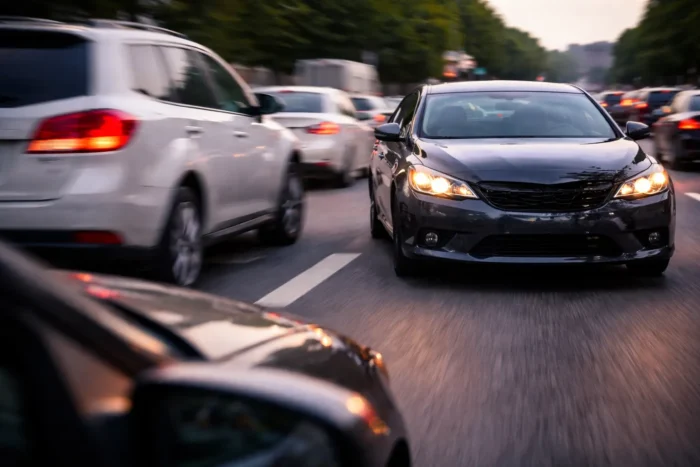
Atlanta Road Rage Accidents: Can You Sue?: Atlanta’s highways and surface streets rank among the most congested in the United States. Bumper-to-bumper traffic on I-285, I-75, and I-85 creates the perfect pressure cooker for driver frustration — and frustration, when it boils over, becomes road rage.
What starts as a honked horn or a muttered curse can escalate into a deliberate collision, a forced lane change, or a violent physical confrontation that leaves innocent drivers, passengers, and bystanders with life-altering injuries.
If you were hurt because another driver let their anger get behind the wheel, you may have the right to sue that driver — and potentially recover substantial compensation. This guide explains what road rage is under Georgia law, why aggressive drivers can be held personally liable, what damages you can pursue, and how the experienced Atlanta personal injury attorneys at Haug Barron Law Group can help you fight back.
What Is Road Rage? Understanding the Legal Distinction
Many people use “road rage” and “aggressive driving” interchangeably, but Georgia law treats them differently — and that distinction matters enormously to your personal injury claim.
Aggressive Driving
Under O.C.G.A. § 40-6-397, aggressive driving occurs when a motorist operates a vehicle with the intent to annoy, harass, molest, intimidate, injure, or obstruct another person, and commits two or more of the following moving violations in a single incident:
- Following too closely (tailgating)
- Improper lane changes or failing to maintain lane
- Passing on the right improperly
- Failing to yield the right of way
- Speeding
- Driving too fast for conditions
Aggressive driving is a misdemeanor in Georgia. A conviction creates powerful evidence for your civil lawsuit.
Road Rage
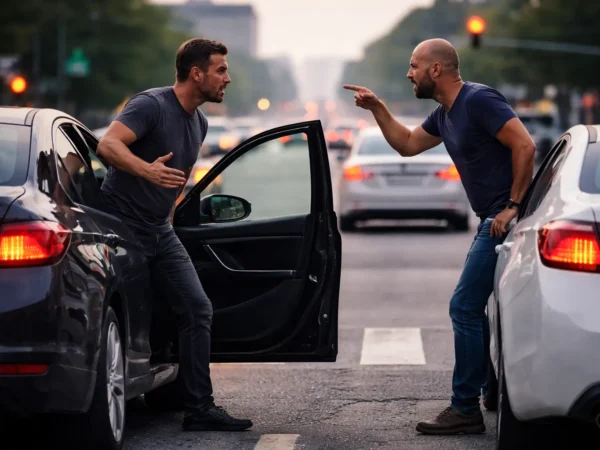
Road rage is a more extreme category of behavior. It involves a deliberate, intentional act committed out of anger — ramming another vehicle, forcing a driver off the road, brandishing a weapon, or exiting a vehicle to physically assault another driver. Road rage incidents can support criminal charges ranging from reckless driving to aggravated assault. They also expose the at-fault driver to punitive damages in a civil lawsuit, which can significantly increase your recovery.
How Common Is Road Rage in Atlanta?
Atlanta’s congestion problem is well-documented. According to the INRIX 2023 Global Traffic Scorecard, Atlanta ranked among the most congested cities in the United States, with commuters losing dozens of hours per year to gridlock. The National Highway Traffic Safety Administration (NHTSA) reports that aggressive driving plays a role in more than half of all traffic fatalities nationwide. Georgia is no exception.
A 2023 report from the AAA Foundation for Traffic Safety found that nearly 80 percent of drivers admitted to expressing significant anger, aggression, or road rage behind the wheel at least once in the prior year. In a metro area the size of Atlanta — with more than six million residents and some of the worst rush-hour congestion in the country — that statistic translates to millions of potentially dangerous encounters every year.
Can You Sue a Road Rage Driver in Georgia?
Yes — and in many cases, you can recover more than you could in a standard car accident claim.
Standard Negligence Claim
Every Georgia driver owes a duty of reasonable care to other road users. When an aggressive driver tailgates, cuts off, or runs a red light out of anger, they breach that duty. If their breach causes your injuries, you have a viable negligence claim under Georgia law.
Intentional Tort Claims
Road rage accidents often rise above mere negligence. When a driver intentionally rams your vehicle, runs you off the road, or assaults you, you may be able to bring additional claims for assault and battery, intentional infliction of emotional distress, and negligence per se (if the driver violated a statute like O.C.G.A. § 40-6-397). Intentional tort claims open the door to punitive damages — an additional category of damages designed to punish particularly egregious conduct.
Punitive Damages Under O.C.G.A. § 51-12-5.1
Georgia law authorizes punitive damages when a defendant’s actions show “willful misconduct, malice, fraud, wantonness, oppression, or that entire want of care which would raise the presumption of conscious indifference to consequences.” A deliberate road rage act — intentionally ramming another vehicle or forcing a driver off the highway — can easily meet this standard. Georgia does cap punitive damages at $250,000 in most negligence cases, but that cap does not apply when the defendant acted with “specific intent to harm.” Road rage cases involving intentional conduct may therefore be uncapped.
Common Road Rage Scenarios and How They Affect Your Claim
Rear-End Collisions From Tailgating
Aggressive tailgating is one of the most common forms of road rage. When the frustrated driver behind you finally makes contact — whether intentionally or as the result of distracted, reckless driving — they are almost always liable. Georgia’s rear-end collision presumption places the burden on the following driver to explain why the crash was not their fault.
Intentional Collisions / PIT Maneuvers
When a driver deliberately rams or side-swipes your vehicle, the incident crosses from negligence into intentional tort territory. Police reports, dashcam footage, and eyewitness accounts become critical. Intentional collisions also support a punitive damages claim.
Forced Run-Off-Road Incidents
A driver who cuts you off so aggressively that you lose control and leave the roadway may argue the contact was not intentional. Do not accept that framing. Georgia courts have consistently found that forcing another driver off the road — even without direct vehicle contact — can constitute reckless or intentional conduct sufficient to support a lawsuit.
Firearms and Weapons Involved
Road rage incidents increasingly involve firearms. If a driver brandished, discharged, or threatened you with a weapon, you have potential claims for assault, battery, and intentional infliction of emotional distress, in addition to any vehicle-related injury claims. You should also file a police report immediately and preserve any physical evidence.
What Compensation Can You Recover?
Economic Damages
- Past and future medical expenses (emergency care, surgery, rehabilitation, physical therapy)
- Lost wages and lost earning capacity
- Property damage to your vehicle
- Out-of-pocket expenses related to your injuries
Non-Economic Damages
- Pain and suffering
- Emotional distress and psychological trauma (including PTSD, anxiety, and depression)
- Loss of enjoyment of life
- Loss of consortium
Punitive Damages
Road rage cases involving intentional or especially reckless conduct can support a punitive damages award. Punitive damages are not meant to compensate you — they are meant to punish the defendant and deter similar conduct. In cases where the punitive cap does not apply, these awards can be substantial.
Key Evidence in a Road Rage Lawsuit
Building a strong road rage claim requires more than your word against the other driver’s. The following types of evidence can make or break your case:
- Dashcam footage from your vehicle or other vehicles in the area
- Traffic cameras — surveillance or traffic camera video from GDOT or nearby businesses
- 911 recordings — call recordings and dispatch logs
- Police report and any criminal charges filed against the at-fault driver
- Witness statements from other drivers, passengers, or bystanders
- Social media posts by the at-fault driver showing anger or threats before or after the incident
- Cell phone records — distracted driving often compounds road rage
- EDR data — vehicle black box data showing speed and braking patterns
- Medical records documenting the full extent of your injuries
Evidence disappears quickly. Dashcam cards overwrite. Surveillance footage is deleted on rolling cycles. The moment you are medically stable, contact an attorney to begin the evidence preservation process.
Insurance Complications in Road Rage Cases
The At-Fault Driver’s Liability Insurance
Georgia requires all drivers to carry minimum liability coverage of $25,000 per person / $50,000 per accident under O.C.G.A. § 33-7-11. However, minimum coverage rarely covers the full extent of serious road rage injuries. Your attorney will investigate whether the at-fault driver carries higher limits or umbrella coverage.
When the At-Fault Driver Is Uninsured or Underinsured
Georgia’s uninsured/underinsured motorist (UM/UIM) statute — O.C.G.A. § 33-7-11 — allows you to make a claim against your own policy when the at-fault driver lacks adequate coverage. Many Georgians do not realize how important UM/UIM coverage is until they are in exactly this situation. Make sure your own policy provides adequate protection.
Homeowner’s or Renter’s Insurance
If the road rage incident involved an intentional act — such as the driver exiting their vehicle and assaulting you — their auto insurer may deny coverage on the grounds that the act was intentional. In those cases, the driver’s homeowner’s or renter’s liability policy may provide an alternate source of recovery. An experienced personal injury attorney will explore all available coverage sources on your behalf.
Georgia’s Statute of Limitations: Do Not Wait
Under O.C.G.A. § 9-3-33, you generally have two years from the date of your injury to file a personal injury lawsuit in Georgia. Missing that deadline almost certainly bars your claim forever, regardless of how strong your case is. There are limited exceptions — for example, if the injured person is a minor — but you should never rely on an exception applying to your situation.
The practical reality is that waiting hurts your case even before the deadline expires. Witnesses forget details. Evidence gets destroyed. The at-fault driver may move, change insurers, or become judgment-proof. Contact a Georgia road rage accident attorney as soon as you are physically able.
What to Do After a Road Rage Accident in Atlanta
The steps you take in the minutes and days following a road rage incident can have a significant impact on your legal claim:
- Call 911 immediately. Every road rage accident should be reported to law enforcement. Request that a police report be filed, and ask the responding officer whether criminal charges are being considered.
- Do not engage with the at-fault driver. Your safety comes first. Remain in your vehicle with doors locked if you feel threatened. Do not exit the vehicle to confront the other driver.
- Seek medical attention right away. Even if you feel fine, adrenaline can mask serious injuries. Get evaluated at an emergency room or urgent care facility the same day. Follow up with your primary care physician and any specialists.
- Document the scene. Photograph vehicle damage, road conditions, skid marks, and any visible injuries. If it is safe to do so, note the make, model, and license plate of the at-fault vehicle.
- Identify witnesses. Ask bystanders for their names and contact information. Witness testimony can be invaluable if the at-fault driver disputes liability.
- Preserve your dashcam footage. Do not allow the memory card to overwrite. Save the footage immediately and provide a copy to your attorney.
- Notify your own insurance company. Report the accident, but do not give a recorded statement or accept any settlement offer without speaking to an attorney first.
- Contact Haug Barron Law Group. The earlier we get involved, the more evidence we can preserve and the stronger your case will be.
Why Choose Haug Barron Law Group for Your Road Rage Claim?
Not every personal injury firm is equipped to handle the unique demands of a road rage case. At Haug Barron Law Group, Personal Injury Lawyers, we represent accident victims exclusively — we never represent insurance companies or defendants. Every case we take is a fight for a real person against powerful interests that would prefer to pay as little as possible.
Trial-Ready Representation
Managing Partner Colin A. Barron has secured multi-million-dollar verdicts and settlements for clients across Georgia. Our reputation for taking cases to trial — when insurance companies refuse to offer fair value — is one of the most important assets we bring to your claim. Insurers know we will not settle for less than your case is worth.
Plaintiff-Only Practice
We have never represented an insurance company. We have never defended a negligent driver. Our loyalty is undivided — it belongs entirely to the people we represent.
Georgia-Specific Knowledge
Our attorneys understand Georgia’s traffic laws, insurance statutes, and court procedures from the ground up. We know how Fulton County, DeKalb County, and Gwinnett County courts handle road rage and aggressive driving claims, and we know how to present your case to a Georgia jury.
No Fee Unless We Win
We handle all personal injury cases on a contingency fee basis. You pay nothing unless and until we recover compensation for you. There are no upfront costs, no hourly rates, and no financial risk to you for making a call.
Have questions about road rage accident claims?
Visit our Georgia Car Accident FAQs to learn when aggressive driving leads to liability, what evidence matters, and what legal options may be available.
Road rage accidents can involve aggressive driving and intentional conduct that significantly impacts liability and damages. Contact Haug Barron Law Group to discuss your case and protect your right to full compensation.
Additional Resources
- Georgia Aggressive Driving Statute — O.C.G.A. § 40-6-397
- Georgia UM/UIM Coverage Statute — O.C.G.A. § 33-7-11
- NHTSA — Speeding and Aggressive Driving Data
- AAA Foundation for Traffic Safety — Road Rage Research
- Georgia Department of Transportation — Atlanta Traffic Resources
This article is provided for general informational purposes and does not constitute legal advice. Reading this content does not create an attorney-client relationship. Contact our office to discuss the specific facts of your case.
Contact Haug Barron Law Group Today for a FREE Consultation.