
Georgia Summer Camp Injury Lawyers for Children
Summer Camp Injuries & Child Legal Rights: Every summer, tens of thousands of Georgia families send their children off to day camps, overnight camps, sports academies, and outdoor adventure programs filled with hope — and trust.
Parents trust that the camps their children attend will keep them safe, properly supervised, and protected from preventable harm. Most of the time, that trust is honored. But every summer, it is also violated — sometimes with devastating consequences.
At Haug Barron Law Group, Personal Injury Lawyers, we know that when a child is injured at summer camp through someone else’s negligence, families are left not only with medical bills and recovery challenges, but with a torrent of unanswered questions. Was someone legally responsible? Does a signed waiver eliminate our rights? How much time do we have? What is our child’s injury claim actually worth?
This article is designed to give Georgia parents clear, authoritative answers — so you know your rights, know what to watch for, and know exactly what to do if the unthinkable happens.
The Scope of the Problem: Summer Camp Injuries in Georgia and Nationally
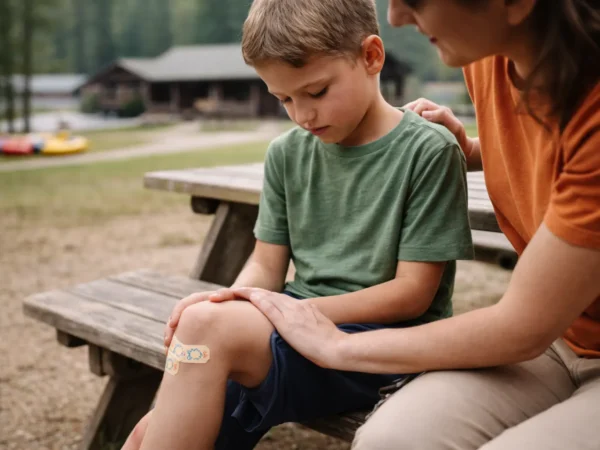
Summer camp injuries are far more common than most families realize. According to the American Academy of Pediatrics, studies of children attending U.S. summer camps have found that roughly one in five campers will experience some form of illness or injury during a camp session. The most common physical injuries include cuts, lacerations, and abrasions (approximately 33% of injuries), fractures (approximately 15%), and sprains and strains (approximately 10%). More serious — and more legally significant — are the cases involving head trauma, drowning or near-drowning, sexual abuse, and catastrophic orthopedic injuries.
The Centers for Disease Control and Prevention (CDC) reports that drowning is the leading cause of accidental death in children ages 1–14, and that emergency departments treat more than 200,000 children each year for playground-related injuries. Both drowning incidents and playground falls are common in summer camp settings, and both frequently involve preventable lapses in supervision or facility maintenance.
In Georgia specifically, the Atlanta metro region — including communities served by our offices in Sandy Springs and Decatur — is home to hundreds of summer camps, ranging from large residential outdoor programs to neighborhood day camps, sports clinics, STEM academies, and therapeutic wilderness programs. Each carries real legal obligations toward the children in their care.
Common Types of Summer Camp Injuries — and How They Happen
Not all injuries are equal under the law. The type of injury, and more importantly how it occurred, determines whether a legal claim exists. Below are the most common categories we handle at Haug Barron Law Group:
Drowning and Aquatic Accidents
Swimming pools, lakes, ponds, and rivers are central features of many Georgia summer camps — and they are among the most dangerous. Children at camp often have widely varying swimming abilities and are mingling in chaotic, high-energy environments. Inadequate supervision, insufficient lifeguard-to-swimmer ratios, unlocked or unfenced water access, and failure to conduct swim proficiency tests can all expose camps to serious liability.
Aquatic injuries are particularly grave because the window for intervention is brief and outcomes — death, anoxic brain injury, permanent neurological damage — can be catastrophic. Camps that post lifeguards who are unqualified, distracted, or insufficient in number have been found legally negligent in Georgia courts.
Falls From Heights: Zip Lines, Climbing Walls, Ropes Courses, and Trees
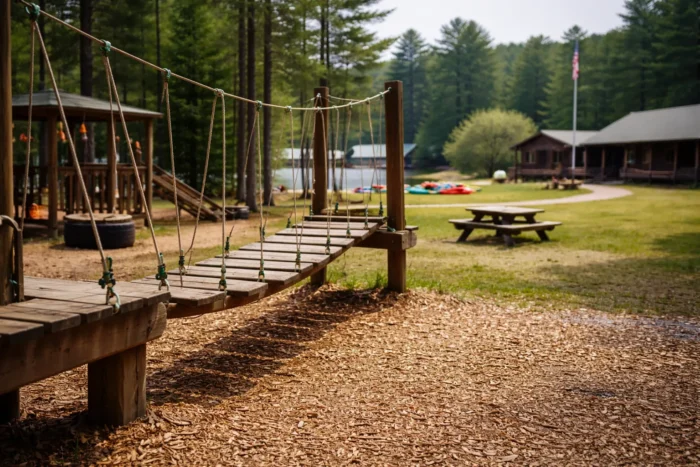
Adventure activities are a core part of the modern summer camp experience and one of the most frequent sources of serious injury. Falls from zip lines, ropes courses, climbing walls, and elevated structures can result in traumatic brain injuries, spinal cord injuries, fractures, and internal organ damage. These activities require specialized safety equipment, rigorous pre-use inspection protocols, and properly trained, certified instructors. When camps cut corners — hiring unqualified staff, skipping equipment inspections, or exceeding weight or capacity limits — the legal exposure is significant.
Playground Accidents and Equipment Failures
Playgrounds are a staple of camp life, but they require ongoing maintenance to remain safe. Broken equipment, exposed hardware, improperly installed structures, insufficient fall-zone surfacing, and overcrowded play areas all create conditions for injury. Under Georgia premises liability law, camps have an affirmative duty to inspect and maintain their facilities in a reasonably safe condition for child use.
Sports-Related Injuries and Negligent Instruction
Contact sports, cheerleading and gymnastics programs, horseback riding, archery, and team competitions all carry inherent risk — but legal liability arises when that risk is amplified by negligence. Unqualified coaches, failure to match participants by age and size, defective equipment, inadequate warmup protocols, or ignoring a child’s injury or complaint of pain can all give rise to personal injury claims.
A 2005 American Academy of Pediatrics study specifically identified horseback riding as one of the two most dangerous activities at summer camps. Equine injuries — including serious head trauma and orthopedic fractures — frequently involve inadequate rider assessment, poor tack maintenance, and insufficient instructor oversight.
Transportation Accidents
Many camps transport children by bus, van, or other vehicles to field trips, off-site activities, and between camp facilities. When those vehicles are involved in accidents, the legal questions can be complex: Was the driver properly licensed and background-checked? Was the vehicle properly maintained? Was the child properly restrained? Could a defective vehicle component have contributed? Transportation injuries require a fact-specific investigation to determine whether liability rests with the camp operator, a third-party transportation provider, a vehicle manufacturer, or some combination.
Camper-on-Camper Violence and Sexual Abuse
Some of the most emotionally devastating and legally complex camp injury cases involve assaults, bullying, and sexual abuse of children by other campers or, more seriously, by staff members. These cases often involve failures in hiring practices (inadequate background checks), poor supervision, delayed or inadequate responses to known patterns of behavior, and failure to report to authorities.
Georgia law is clear that camps cannot contract away liability for willful misconduct or gross negligence — and courts have held that sexual abuse by a staff member can constitute both. If your child has been subjected to abuse at a summer camp, we urge you to contact us immediately.
Heat Stroke, Dehydration, and Medical Negligence
Georgia summers are brutally hot. Camps that do not provide adequate shade, hydration breaks, and heat monitoring for children engaged in outdoor activities can face liability when a camper suffers heat stroke, heat exhaustion, or serious dehydration. Similarly, camps that fail to properly administer a child’s prescribed medications, ignore documented medical conditions, or delay emergency care when a child shows signs of illness or injury can be held responsible for the harm that results.
Georgia Law: What Summer Camps Owe Your Child
Under Georgia law, summer camp operators owe a duty of reasonable care to all children in their program. This legal duty — grounded in both Georgia common law negligence principles and the state’s premises liability statutes — requires camps to:
- Maintain safe facilities and equipment through regular inspection and repair
- Provide adequate and qualified supervision appropriate to the age, number, and activity level of campers
- Implement and enforce safety protocols consistent with industry standards for each activity offered
- Conduct proper background checks on all staff and volunteers who have contact with children
- Respond appropriately to known dangers and not ignore prior incidents or complaints
- Provide emergency medical response when a child is injured or becomes ill
Georgia’s Official Code of Georgia Annotated (O.C.G.A.) §§ 49-5-12 and 49-5-60 et seq. governs the licensing and oversight of child-caring programs in the state, including Outdoor Child Caring Programs (therapeutic camps). Georgia’s Bright from the Start: Department of Early Care and Learning (DECAL) oversees day camp licensing and exemption requirements. Day camp programs serving children 5 and older that operate during school breaks can apply for an exemption from licensure — but all camps, licensed or exempt, remain bound by the legal duty to exercise reasonable care over the children entrusted to them.
Important: What Georgia Law Says About Liability Waivers. Many Georgia summer camps require parents to sign liability waivers as part of registration. Under Georgia law, these waivers are generally enforceable for ordinary negligence — but they cannot shield a camp from liability for gross negligence, willful misconduct, or intentional harm (O.C.G.A. § 51-1-6). This means that even if you signed a waiver, you may still have a strong legal claim if your child was seriously injured due to reckless disregard for safety, inadequate supervision of a known danger, or staff misconduct. A waiver is not the end of your case — call us before you assume your rights are gone.
Who Can Be Held Legally Responsible?
One of the most important — and often overlooked — aspects of summer camp injury cases is that multiple parties may bear legal responsibility for a single incident. At Haug Barron Law Group, we investigate every potential avenue of liability, which may include:
- The camp operator or owner — for negligent supervision, unsafe facilities, inadequate staffing, or failure to follow safety regulations
- Individual camp staff or counselors — for direct acts of negligence or misconduct
- Third-party facility owners — if the camp leased a site where a dangerous condition caused the injury
- Equipment manufacturers — if defective gear (a harness, a climbing hold, a piece of playground equipment) contributed to the injury under Georgia product liability law
- Transportation companies — if a vehicle accident was involved
- The camp’s parent organization — franchise camps, faith-based networks, and national organizations may bear vicarious liability for the acts of their member camps
Identifying all responsible parties matters because it maximizes the potential recovery for your child and ensures that every source of insurance coverage is identified and pursued. Georgia follows a modified comparative fault rule (O.C.G.A. § 51-12-33), which means that as long as your child was less than 50% responsible for the injury, they can still recover damages — reduced only by any percentage of fault attributed to them.
Understanding Georgia’s Statute of Limitations for Child Injury Claims
Timing is critically important in personal injury cases. In Georgia, the general statute of limitations for personal injury claims is two years from the date of injury (O.C.G.A. § 9-3-33). However, when the injured party is a minor, Georgia law provides an important exception: the two-year clock does not begin to run until the child turns 18, meaning a claim can potentially be filed until the child reaches age 20.
But waiting is not in your child’s best interest. Evidence disappears. Witnesses’ memories fade. Camp employees move on. Surveillance footage is overwritten. The sooner an attorney begins investigating, the stronger your case will be.
Georgia Statute of Limitations — Quick Reference: General rule: 2 years from date of injury (O.C.G.A. § 9-3-33) | For minors: the clock does not begin until the child turns 18 | For claims against government-operated camps: special notice requirements apply — contact us immediately | For wrongful death claims: 2 years from date of death (O.C.G.A. § 51-4-2) | Bottom line: Contact an attorney as soon as possible — do not rely on extended deadlines to protect your child’s rights.
What Damages Can My Child Recover?
Georgia law allows injured children and their families to recover compensation for the full spectrum of losses caused by the negligence of a summer camp.
Economic (Special) Damages
- All past and future medical expenses, including emergency care, surgery, hospitalization, physical therapy, occupational therapy, neurological evaluation, psychiatric treatment, and long-term care needs
- Future lost earning capacity, if the injury causes permanent impairment that will affect the child’s ability to work as an adult
- Cost of adaptive equipment, home modifications, or specialized educational support
Non-Economic (General) Damages
- Pain and suffering — both physical and emotional — experienced by the child
- Permanent disfigurement or physical impairment
- Loss of enjoyment of life, including the inability to participate in activities the child previously loved
- Psychological trauma, anxiety, PTSD, and related mental health consequences
Parental Damages
In Georgia, parents may pursue their own claim for the loss of the child’s services and for medical expenses incurred on the child’s behalf during the child’s minority (O.C.G.A. § 51-1-3). Georgia does not cap non-economic damages in most personal injury cases, which means that the full value of your child’s suffering is recoverable — something that is especially important in catastrophic injury cases involving brain injury, spinal cord damage, or permanent disability.
What to Do If Your Child Is Injured at Summer Camp: A Step-by-Step Guide
If your child suffers a significant injury at summer camp, the steps you take in the hours, days, and weeks that follow can have a major impact on the strength of any legal claim.
- Seek Immediate Medical Attention. Your child’s health comes first. Even if injuries appear minor initially, insist on a thorough medical evaluation. Some conditions — including concussions, internal bleeding, and spinal injuries — may not present obvious symptoms immediately. Document everything. Keep all records, bills, discharge instructions, and follow-up appointment notes.
- Preserve and Document Evidence. Before you leave the camp — or as soon as possible after — photograph your child’s visible injuries, the accident scene, any defective equipment, and any conditions that may have contributed to the harm. Request a copy of the camp’s incident report. Write down the names and contact information of any witnesses, including other campers’ parents, staff, and bystanders.
- Formally Request Records from the Camp. In writing, request copies of the camp’s incident reports, staff training records, supervision logs, equipment inspection records, and any prior complaints or incident reports related to the same activity or area. Do this quickly — some camps are quick to destroy or “lose” records after a serious incident.
- Do Not Sign Any Documents from the Camp or Its Insurer. After a serious injury, you may be approached by the camp’s insurance company or legal representatives offering a quick settlement or asking you to sign releases or statements. Do not sign anything without speaking to a lawyer first. Early settlement offers are almost always far below what your child’s claim is actually worth.
- Contact Haug Barron Law Group Immediately. The sooner we begin investigating, the better. Our team will deploy quickly to preserve evidence, identify all responsible parties, and build the strongest possible case for your child. Call us at (844) 428-4529 — 1-844-HAUG-LAW — or visit www.hblg.law to schedule a free consultation. We represent summer camp injury victims on a contingency fee basis — you pay nothing unless we recover for your child.
Questions to Ask Before You Send Your Child to Camp
The best way to protect your child is to ask tough questions before signing the enrollment forms. We recommend asking every camp the following:
- What are your counselor-to-camper ratios for different activities, including aquatic activities?
- Are your lifeguards currently certified through the American Red Cross or a comparable authority? May I see their certifications?
- Do all staff members undergo comprehensive background checks prior to hire?
- How is your climbing, zip line, or ropes course equipment inspected, and how often?
- Is the camp licensed or registered with DECAL (Georgia’s Department of Early Care and Learning), or have you applied for the appropriate exemption?
- What is your written emergency action plan? Who is trained in first aid and CPR on site at all times?
- How are child injuries and incidents reported to parents, and what is your timeline?
- What general and professional liability insurance does the camp carry? What are the coverage limits?
You can also check whether your child’s camp is accredited by the American Camp Association (ACA), which maintains standards for safety, staff qualifications, program quality, and risk management. While ACA accreditation is not legally required and does not guarantee safety, it is a meaningful indicator of a camp’s commitment to best practices.
Key Legal Resources for Georgia Families
- Georgia Bright from the Start (DECAL) — Camp Licensing Information
- Georgia Department of Human Services — Outdoor Child Caring Programs
- American Camp Association — State Regulations for Georgia
- Centers for Disease Control and Prevention — Child Injury Prevention
- Official Code of Georgia Annotated (O.C.G.A.) — Free Public Access
- Georgia Courts — Personal Injury and Civil Litigation Resources
About Haug Barron Law Group, Personal Injury Lawyers
Haug Barron Law Group, Personal Injury Lawyers, is a plaintiff’s-only personal injury firm headquartered in Atlanta, Georgia, with offices in Sandy Springs and Decatur. We represent injured people and families — period. We never represent insurance companies or corporate defendants, which means our interests are always fully aligned with yours.
Our firm handles serious personal injury cases across Georgia, including child injury and summer camp claims, car and truck accidents, medical malpractice, nursing home abuse, premises liability, and wrongful death. We bring particular strength to disputed liability cases — cases where the defense is fighting hard to avoid accountability — and we have deep experience litigating in both Georgia state courts and the U.S. District Court for the Northern District of Georgia (NDGA).
Every case we accept is handled on a contingency fee basis. You pay absolutely nothing unless we win. There is no risk, and no reason to wait. If your child was injured this summer — or any summer — we are ready to help.
Your Child’s Rights. Our Mission. If your child was injured at summer camp due to someone else’s negligence, call us for a free, no-obligation consultation. Haug Barron Law Group, Personal Injury Lawyers — (844) 428-4529 | | Contact Us | Atlanta • Sandy Springs • Decatur, Georgia | No Fee Unless We Win.
Summer camp injuries can have serious consequences, and determining liability is critical to protecting your child’s future. Contact Haug Barron Law Group to discuss your case and pursue accountability.
Legal Disclaimer: This article is published by Haug Barron Law Group, Personal Injury Lawyers, for informational purposes only. It does not constitute legal advice and does not create an attorney-client relationship. Georgia law is complex and fact-specific; the information herein is general in nature. For advice about your specific situation, please contact our office for a confidential consultation. Results in past cases do not guarantee similar outcomes in future cases.
Contact Haug Barron Law Group Today for a FREE Consultation.